Can Men With Zero Sperm Count Become Fathers? A Guide to Azoospermia Treatment
Yes, men with zero sperm count, medically known as azoospermia, can sometimes become biological fathers. Yet, there is little awareness about this condition and its treatment options in India, as many men believe that zero sperm count directly means infertility.
According to the WHO, India’s infertility rate is estimated at 3.9% to 16.8%, with male infertility accounting for around 40% of cases. Yet, information about conditions such as azoospermia remains limited. The overflowing information on Reddit and Quora can add to the confusion, as individual experiences do not represent every case.
Azoospermia means there are no measurable sperm in the semen. This does not always mean the testicles cannot produce sperm. In some men, sperm are produced normally but cannot reach the semen due to a blockage. In others, sperm production itself is impaired.
At Archish Fertility & IVF Clinic in Bengaluru, our goal with this guide is to explain what azoospermia means, how it is diagnosed, which treatment options are available, and how some men with zero sperm count may still have a chance at fatherhood.
What is Azoospermia?
Azoospermia is a male fertility condition in which no measurable sperm are present in a man’s ejaculate. Sperm are normally produced in the testicles and transported through the reproductive tract into the semen. In azoospermia, this pathway results in an ejaculate with no detectable sperm.
The absence of sperm is established through microscopic examination of the semen. Because sperm may be present in very small numbers, the sample can be centrifuged to concentrate any sperm cells into the sediment for closer examination. This helps distinguish true azoospermia from cases where sperm are present in extremely low numbers.
Azoospermia usually does not alter the appearance of semen. Its color, volume, and consistency can remain within a typical range because sperm contribute only a small fraction of seminal fluid. Clinically, it is not important how the semen looks, but whether sperm cells are present and, when found, whether they are viable for reproduction.
Is Azoospermia the Same as Zero Sperm Count?
Yes. Azoospermia and zero sperm count generally describe the same finding: no sperm are detected in the ejaculate. Azoospermia is the clinical term used by fertility specialists, while zero sperm count is a simpler way of describing the result to patients.
Azoospermia and zero sperm count are often used interchangeably, but a few related terms in a semen report can mean something different.
| Term | What it means |
|---|---|
| Azoospermia | No sperm are detected in the ejaculate, including after examination of the centrifuged semen pellet. |
| Zero sperm count | A patient-friendly way of describing the same finding: no measurable sperm are detected in the semen. |
| Cryptozoospermia | Extremely rare sperm may be detected only after concentrating the semen sample. This means sperm are present, so it is not true azoospermia. |
| Severe oligozoospermia | Sperm are present in the ejaculate but at a very low concentration. |
| Aspermia | No semen is ejaculated at all. This is different from azoospermia, where semen is ejaculated but contains no detectable sperm. |
What Are the Types of Azoospermia?
Azoospermia is broadly classified into obstructive azoospermia (OA) and non-obstructive azoospermia (NOA). The difference lies in whether sperm are being produced but cannot reach the semen, or whether sperm production itself is impaired.
1. Obstructive azoospermia (OA): Sperm production may be normal, but a blockage in the reproductive tract prevents sperm from reaching the ejaculate. Causes can include a previous vasectomy, certain infections or surgeries, or congenital absence of the vas deferens. Because sperm may still be produced in the testicles, treatment can involve correcting the blockage or retrieving sperm from the epididymis or testicles for use with IVF and ICSI.
2. Non-obstructive azoospermia (NOA): Impaired sperm production within the testicles. It can be associated with genetic conditions, hormonal disorders, testicular damage, or other factors affecting sperm production. Treatment depends on the underlying cause, and in some men, sperm can still be found through surgical retrieval such as micro-TESE and used for ICSI.
A specialist can often distinguish between OA and NOA using a combination of medical history, physical examination, semen volume, testicular examination, and hormone levels, particularly FSH. Genetic testing may also be recommended when impaired sperm production is suspected.
What Causes Azoospermia?
The causes vary depending on whether sperm production is affected or sperm is blocked from reaching the ejaculate.
Causes of Obstructive Azoospermia
- Blockage in the epididymis, vas deferens, or ejaculatory ducts
- Previous vasectomy or reproductive tract surgery
- Infections or inflammation
- Congenital absence of the vas deferens, sometimes associated with CFTR gene mutations.
Causes of Non-obstructive Azoospermia
- Hormonal disorders affecting sperm production
- Genetic conditions such as Klinefelter syndrome or Y-chromosome microdeletions
- Varicocele or undescended testicles
- Testicular injury, infection, or impaired testicular function
- Chemotherapy, radiation, or certain medications
- Idiopathic azoospermia, when no specific cause is identified
What are the Symptoms of Azoospermia?
Azoospermia often has no obvious symptoms and is discovered during fertility evaluation. Some men may have signs of the underlying cause, such as low libido or hormonal symptoms, testicular abnormalities, or infection-related changes.
How Is Azoospermia Diagnosed?
Azoospermia is confirmed through semen analysis, but one test is usually not enough. The evaluation also helps determine whether sperm production is impaired or sperm is being blocked from reaching the semen.
- Semen Analysis: Checks for sperm concentration, motility, and other semen parameters. If no sperm are seen, the sample may be centrifuged and the sediment examined for rare sperm.
- Repeat Semen Analysis: A second sample is generally recommended to confirm persistent azoospermia.
- Hormone Testing: FSH and testosterone can provide clues about testicular sperm production. LH and other hormones may be checked when indicated.
- Physical Examination: The doctor assesses testicular size, the epididymis and vas deferens, and looks for signs of obstruction or impaired sperm production.
- Genetic Testing: Karyotyping and Y-chromosome microdeletion testing may be recommended in men with suspected non-obstructive azoospermia.
- Imaging: Scrotal or transrectal ultrasound may be used when the examination or semen findings suggest a structural problem.
The exact tests depend on the semen findings, medical history, and suspected cause.
How Is Azoospermia Treated?
Treatment depends primarily on whether the azoospermia is obstructive or non-obstructive. The goal is either to restore sperm flow, improve sperm production when possible, or retrieve sperm for assisted reproduction.
Treatment for Obstructive Azoospermia
- Surgical Correction: If the blockage is treatable, microsurgical procedures may restore the passage of sperm into the ejaculate.
- Sperm Retrieval: When reconstruction is not suitable or does not restore sperm, sperm can be retrieved from the epididymis or testicles.
- IVF with ICSI: Retrieved sperm can be used for ICSI to fertilize an egg.
Treatment for Non-obstructive Azoospermia
- Hormonal Treatment: Appropriate when a hormonal disorder is responsible for impaired sperm production.
- Treatment of an Underlying Condition: Reversible contributors may be addressed where possible.
- Surgical Sperm Retrieval: In selected men, micro-TESE may locate sperm within the testicular tissue even when none is present in the ejaculate.
- IVF with ICSI: If viable sperm are retrieved, ICSI can be used to fertilize an egg.
The Important Pointers:
- Azoospermia treatment is not the same for every man. The underlying cause, hormone profile, testicular function, and possibility of sperm retrieval all influence the treatment plan.
- When sperm are not found in the ejaculate, they may be retrieved directly from the male reproductive tract. The technique depends on where sperm are likely to be present and whether the azoospermia is obstructive or non-obstructive.
What Are the Sperm Retrieval Options for Azoospermia?
When sperm are not present in the ejaculate, they may sometimes be retrieved from the epididymis or testicles and used for ICSI. The method depends on where sperm are likely to be found and whether the azoospermia is obstructive or non-obstructive.
- PESA (Percutaneous Epididymal Sperm Aspiration): Sperm are aspirated from the epididymis, mainly for obstructive azoospermia.
- TESA (Testicular Sperm Aspiration): A needle is used to collect sperm-containing tissue from the testicle.
- TESE (Testicular Sperm Extraction): A small piece of testicular tissue is removed and examined for sperm.
- Micro-TESE (Microsurgical Testicular Sperm Extraction): A microscope helps identify areas of the testicle more likely to contain sperm. It is particularly used in selected cases of non-obstructive azoospermia.
If viable sperm are retrieved, they can be used with ICSI to fertilize an egg.
What If Sperm Cannot Be Retrieved in Azoospermia?
If sperm retrieval does not yield viable sperm, the next step depends on the underlying cause and the couple’s fertility goals. In some cases, further treatment may be possible; in others, donor sperm or alternative family-building options may be discussed.
- Review the Diagnosis: The specialist may reassess hormone levels, genetic results, and testicular function to determine whether another treatment could improve sperm production.
- Consider another Retrieval Approach: In selected cases, a different or more targeted retrieval technique may be appropriate.
- Donor Sperm: If sperm cannot be obtained despite appropriate treatment, donor sperm can be used with IUI or IVF.
- Other Family-building options: Adoption or other legally available pathways may also be considered.
A failed sperm retrieval does not automatically mean that all fertility options have been exhausted. The appropriate next step depends on the individual diagnosis and previous treatment.
Can IVF and ICSI Help Men With Azoospermia?
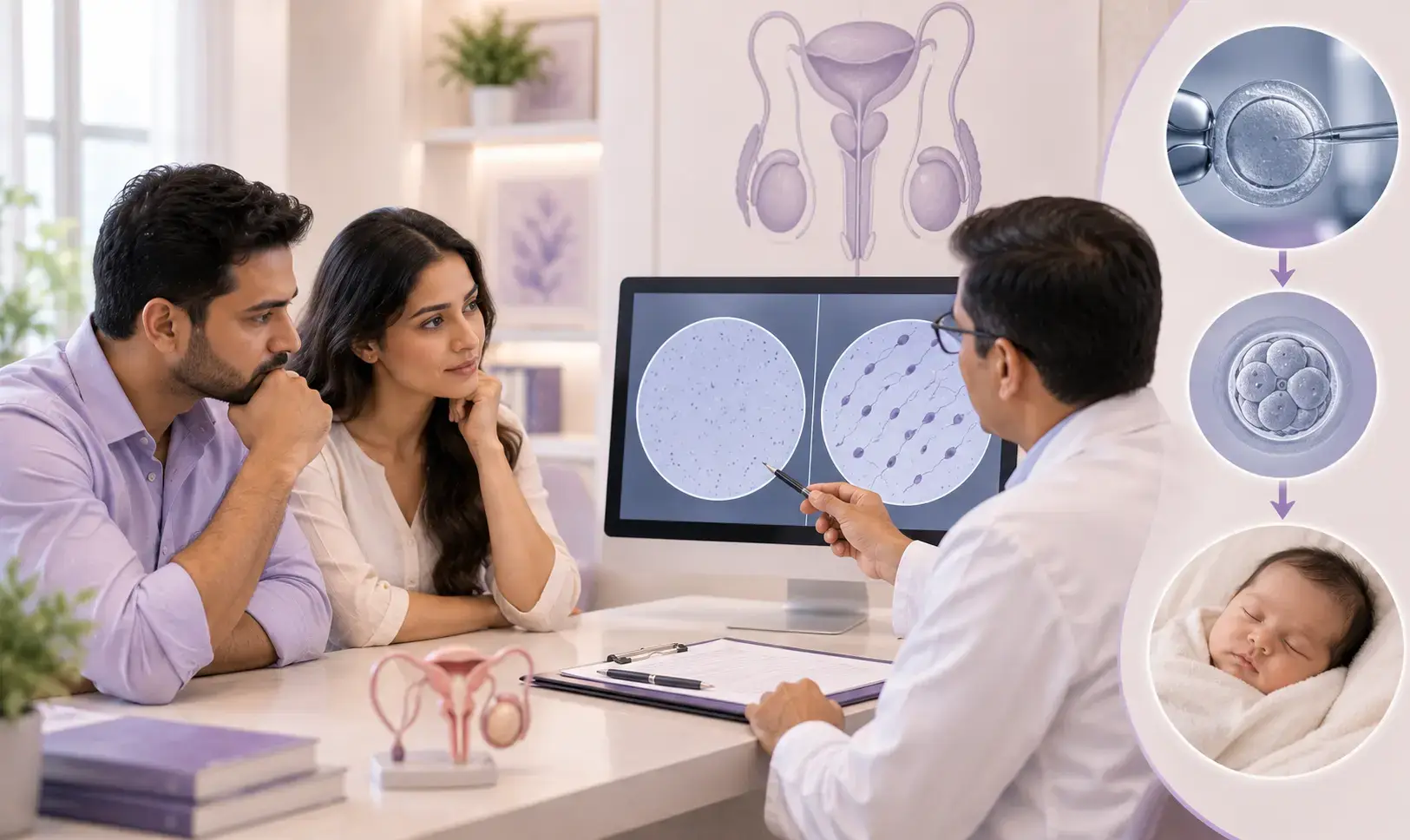
Yes. IVF with ICSI can help when viable sperm can be retrieved, even if no sperm are present in the ejaculate. ICSI is particularly useful in severe male-factor infertility because it requires only a single viable sperm to be injected directly into an egg.
The process typically involves:
- Retrieving sperm from the epididymis or testicle.
- Collecting eggs through an IVF cycle.
- Injecting a viable sperm into each suitable egg using ICSI.
- Culturing the resulting embryos before transferring a suitable embryo to the uterus.
What Determines the Chances of Fatherhood With Azoospermia?
This is a better next section than another treatment-focused heading. It lets us explain the factors that actually influence outcomes without repeating the treatment options.
- Type of Azoospermia: Obstructive azoospermia generally offers better prospects for sperm retrieval because sperm production may be preserved.
- Underlying Cause: Hormonal, genetic, and testicular factors can affect whether sperm production can be restored or sperm can be retrieved.
- Sperm Retrieval Success: The presence of viable sperm in the epididymis or testicular tissue is an important factor.
- Female Partner’s Fertility: Egg quality, age, and other reproductive factors also influence the overall chance of pregnancy.
- Embryo Development: When IVF and ICSI are used, fertilization and subsequent embryo development also affect the outcome.
When Should You See a Fertility Specialist for Azoospermia?
Consider a fertility evaluation if:
- A semen analysis shows no sperm, particularly if a repeat test confirms the finding.
- You are trying to conceive, and pregnancy has not occurred despite regular, unprotected intercourse.
- You have a history of vasectomy, testicular surgery, undescended testicles, infections, chemotherapy, or hormonal problems that may affect fertility.
- You have been diagnosed with a condition that can affect sperm production or transport.
At Archish Fertility & IVF Clinic in Bengaluru, our fertility specialists evaluate azoospermia in the context of the individual patient rather than treating every zero sperm count the same way. From identifying the underlying cause to considering sperm retrieval and assisted reproduction, the right approach begins with understanding where the problem lies.
If you have been told that you have azoospermia, a detailed fertility evaluation can help you understand your options and make an informed decision about the path to parenthood.
FAQs
Yes. If sperm can be retrieved from the epididymis or testicles, they may be used with ICSI to achieve biological fatherhood. If no viable sperm can be obtained, donor sperm may be considered.
There is no proven natural treatment that can reliably restore sperm in azoospermia. Treatment depends on the underlying cause, and some causes may be medically or surgically treatable.
Not necessarily. In obstructive azoospermia, the testicles may produce sperm normally, but a blockage prevents sperm from reaching the ejaculate.
Not always. Some cases are reversible, particularly when caused by certain hormonal problems or an obstruction. Other forms may require sperm retrieval or assisted reproduction.
There is no single success rate for azoospermia. The outcome depends on the cause, whether viable sperm can be retrieved, the treatment used, and the female partner's reproductive factors.
Yes. Testosterone therapy can suppress the hormones that stimulate sperm production and may significantly reduce or stop sperm production while it is being used.