Thin Endometrium: How to Improve Your Uterine Lining Before Embryo Transfer?
A thin uterine lining before embryo transfer can be improved by adjusting estrogen support, giving the endometrium more time to develop, or treating problems that affect the uterine cavity. An embryologist may also review the IVF protocol and previous cycle response before deciding whether to proceed with embryo transfer.
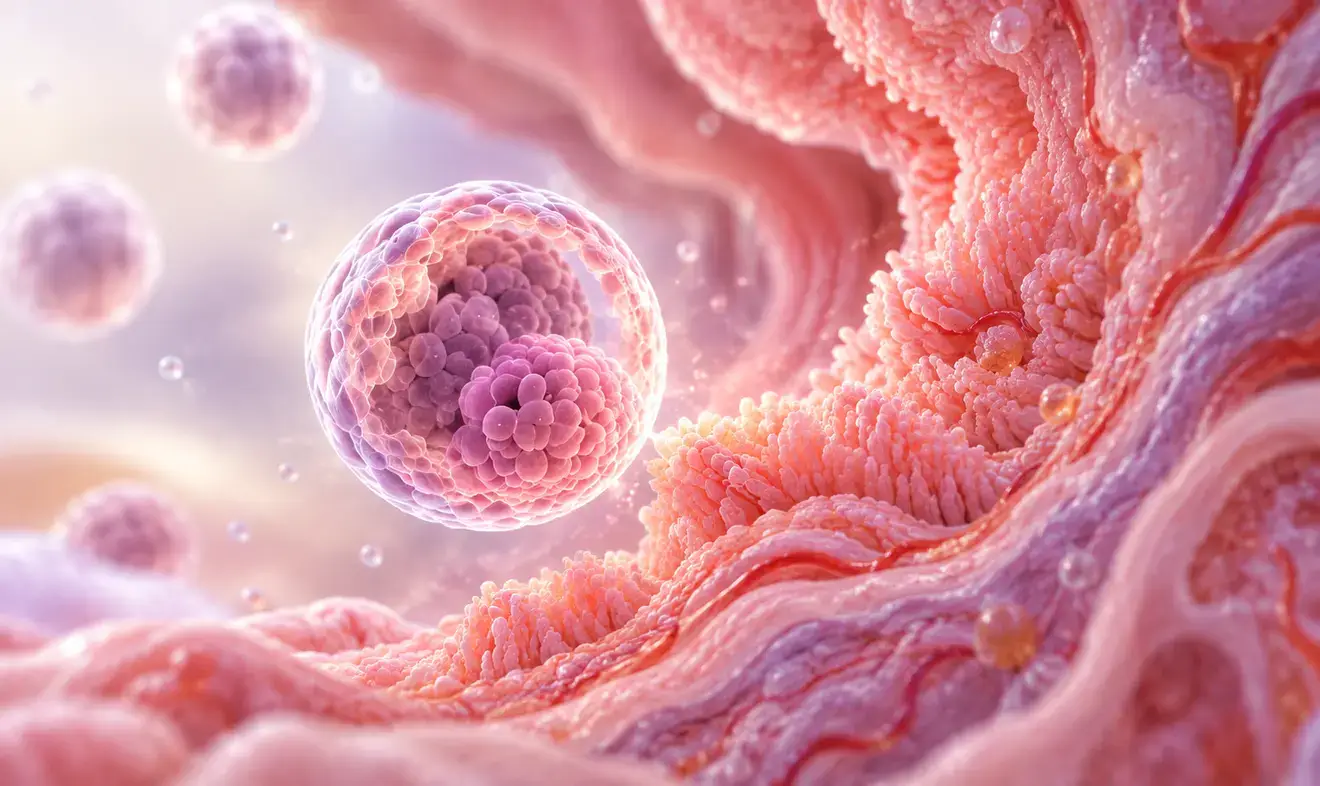
The endometrium, or uterine lining, is the tissue lining the inside of the uterus. It grows and changes throughout the menstrual cycle under the influence of hormones, particularly estrogen and progesterone. During IVF, its thickness and appearance are monitored by ultrasound because the embryo needs a receptive endometrium for implantation.
An endometrial thickness below 7 mm is commonly considered thin around the time of embryo transfer, although there is no absolute cutoff that determines IVF success. This blog explains what causes a thin endometrium before embryo transfer, how it is assessed, what can be done to improve it, and how Archish Fertility and IVF Clinic in Bangalore tailors treatment to each patient.
What is a Thin Endometrium Lining?
The endometrium naturally changes in thickness throughout the menstrual cycle. It is at its thinnest after menstruation and gradually grows as estrogen levels rise. During IVF, a transvaginal ultrasound measures this lining and helps the fertility specialist assess its development before embryo transfer.
A lining measuring less than 7 mm around the time of embryo transfer is commonly described as thin. However, this is not an absolute cutoff. Studies and clinical practice use slightly different thresholds, and pregnancy can still occur with a thinner lining.
| Cycle phase | Typical endometrial thickness | What happens to the lining |
|---|---|---|
| Menstrual phase (during your period) | 2 to 4 mm | The previous uterine lining sheds during menstruation. |
| Early proliferative phase (after your period) | 5 to 7 mm | The lining starts rebuilding as estrogen levels rise. |
| Late proliferative phase (the days leading up to ovulation) | Often 7 mm or more | The lining continues to grow and develops a characteristic layered appearance. |
| Secretory phase (after ovulation) | Thickness may remain similar or change slightly | Progesterone changes the lining and prepares it for possible implantation. |
During the late proliferative phase, the endometrium may show a trilaminar or triple-line pattern on ultrasound. This means the lining appears as three distinct layers. It is a common feature of the endometrium before ovulation and is one of the characteristics doctors may consider alongside its thickness.
In a frozen embryo transfer cycle, the fertility team usually monitors how the lining responds during endometrial preparation, including its thickness and appearance, before progesterone is started and the transfer is scheduled. Estrogen helps the lining grow, while progesterone later changes it into a state suitable for implantation.
What this means clinically: the ultrasound measurement is only one part of assessing the endometrium. Your fertility specialist may also consider its appearance, hormonal preparation, uterine cavity, and the timing of progesterone and embryo transfer.
Why is Endometrial Thickness Important for Embryo Transfer?
Endometrial thickness is important because the endometrium is where the embryo needs to implant and establish an early pregnancy. A well-developed lining is one of the factors doctors assess when preparing for embryo transfer.
- It provides the tissue needed for implantation: The embryo must attach to and interact with the endometrium after transfer.
- It reflects endometrial development: The lining grows in response to estrogen and undergoes further changes under progesterone before it becomes receptive to an embryo.
- Very thin linings are associated with lower IVF success rates: Studies have found lower implantation, clinical pregnancy, and live birth rates at lower endometrial thicknesses, although the strength of this association varies between studies.
- It helps doctors assess the transfer cycle: Endometrial thickness is considered alongside embryo quality, hormonal preparation, uterine health and other clinical factors when planning embryo transfer. It is not used as a standalone measure of whether a cycle will succeed.
- Persistent thin lining may warrant further evaluation: When the endometrium remains thin across treatment cycles, the fertility team may review the hormonal preparation and look for factors affecting the uterine cavity or endometrial development.
What Causes a Thin Uterine Lining During IVF?
A thin uterine lining during IVF can have several causes. In some women, the endometrium responds poorly to hormonal preparation. In others, a problem inside the uterus may be affecting its growth.
Common causes include:
- Previous Uterine Procedures: Procedures such as dilation and curettage (D&C), particularly when complicated by scarring, can damage the basal layer of the endometrium and contribute to a persistently thin lining.
- Intrauterine Adhesions: Also called Asherman syndrome, these are bands of scar tissue that form inside the uterine cavity and can interfere with normal endometrial growth.
- Previous Uterine Infection or Inflammation: Certain infections may affect the endometrium and its ability to develop normally.
- Inadequate Hormonal Response: The lining needs sufficient estrogen exposure to grow during the proliferative phase. A suboptimal response to estrogen can result in a thinner endometrium.
- Uterine Conditions: Polyps, fibroids, or other abnormalities affecting the uterine cavity may interfere with normal endometrial development.
- Unexplained Thin Endometrium: Sometimes, the lining remains thin despite appropriate hormonal preparation and no obvious abnormality. In these cases, the cause may not be identifiable.
How Is Thin Endometrium Diagnosed Before Embryo Transfer?
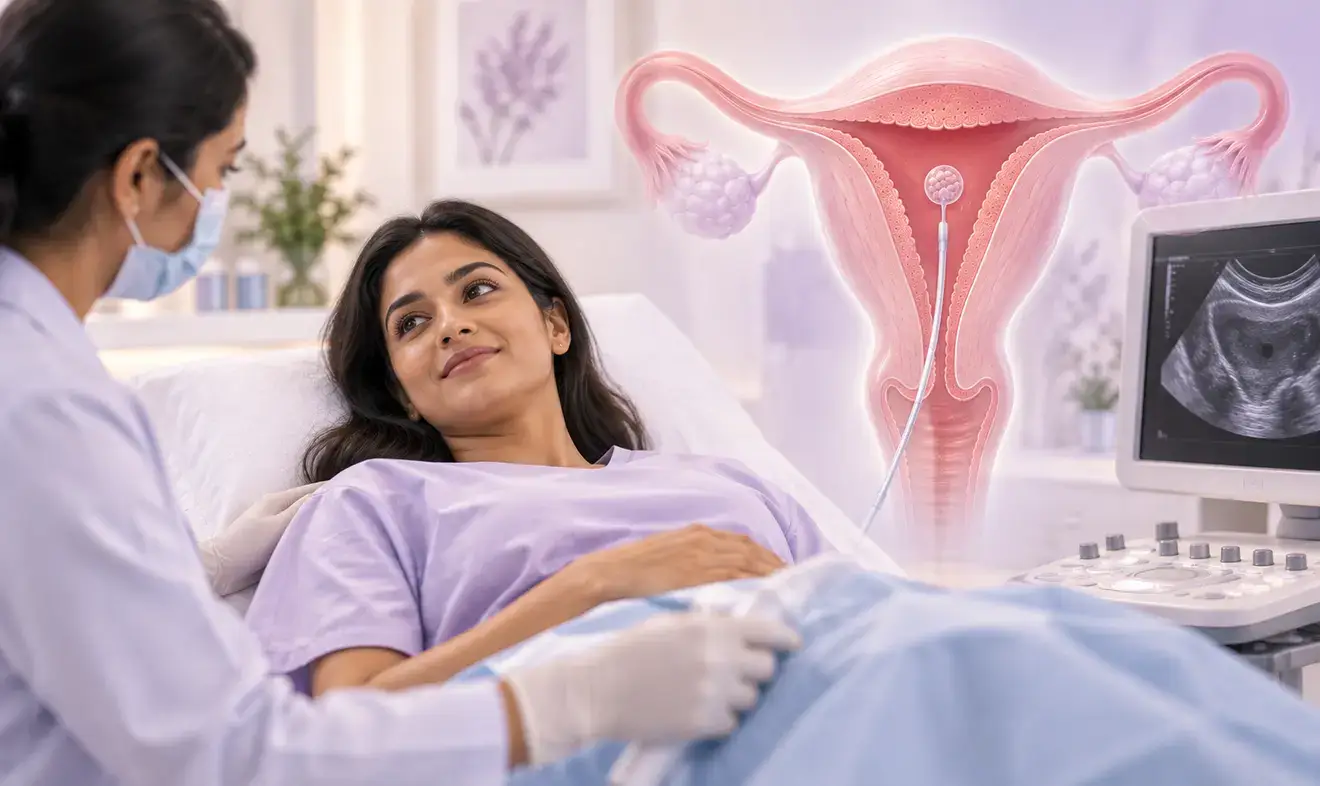
Diagnosis starts with a transvaginal ultrasound, usually performed at the appropriate stage of the IVF or frozen embryo transfer cycle. The scan measures the endometrial thickness and assesses its appearance, including the triple-line pattern (three visible layers of the lining).
If the lining remains thin, the next step is to understand why it is not developing as expected.
Blood Flow Assessment
A Doppler ultrasound can assess blood flow to the uterus and endometrium. It may provide additional information when the lining remains thin, although blood-flow measurements do not by themselves diagnose the cause.
Uterine Cavity Assessment
Saline sonohysterography, which uses saline to outline the uterine cavity during ultrasound, or hysteroscopy, which uses a small camera to examine the cavity directly, can identify adhesions, polyps, fibroids, or other abnormalities.
Assessment for Endometrial Inflammation
If your history or symptoms raise suspicion of chronic endometritis, which is persistent inflammation of the uterine lining, your doctor may recommend an endometrial biopsy.
Review of Previous Uterine or Pelvic History
Past D&C procedures, miscarriage management, uterine surgery, infections, or conditions such as genital tuberculosis may provide clues to why the lining is not developing normally.
How Can You Improve Your Uterine Lining Before Embryo Transfer?
Once the cause and treatment history are clear, your fertility specialist can choose an approach to improve endometrial development before embryo transfer. Depending on the individual situation, options may include:
- Extended Estrogen Support: Estrogen may be given orally, vaginally, or through a skin patch. Your doctor may adjust the dose or continue treatment for longer to give the lining more time to develop.
- Vaginal Sildenafil: This medication may be considered in selected cases because it can affect blood flow to the uterus. However, evidence for improving IVF outcomes remains inconsistent, so it is not routinely recommended for everyone.
- L-arginine: This amino acid has been studied for its potential effects on uterine blood flow and endometrial thickness. Evidence remains limited, and supplementation should only be considered under medical supervision.
- Vitamin E or Low-dose Aspirin: These have been investigated as add-on treatments in some protocols, but evidence is not strong enough to consider them standard treatment for thin endometrium.
- Hysteroscopic Adhesiolysis: If Asherman syndrome, or scar tissue inside the uterus, is confirmed, hysteroscopy can be used to remove the adhesions and restore the uterine cavity.
- Treatment for Chronic Endometritis: If a biopsy confirms chronic endometritis, your doctor may prescribe antibiotics before a subsequent embryo transfer.
- PRP and Other Emerging Therapies: Platelet-rich plasma (PRP) and growth-factor-based treatments are being studied for persistent thin endometrium. Some studies report improved lining thickness, but evidence on whether they improve pregnancy or live-birth rates is still limited.
Can Diet and Lifestyle Improve Endometrial Thickness?
Diet and lifestyle can support overall reproductive health, but no specific food, drink, or home remedy has been proven to reliably thicken the endometrium before embryo transfer.
During IVF, focus on habits that support your general health and help you follow the treatment plan consistently:
- Eat a balanced diet: Include adequate protein, vegetables, fruits, whole grains, healthy fats, and iron-rich foods.
- Stay physically active: Regular, moderate exercise supports cardiovascular health without placing excessive stress on the body.
- Avoid smoking: Smoking can negatively affect reproductive health and is best avoided during fertility treatment.
- Limit alcohol: Avoiding alcohol during IVF is the safer approach.
- Take prescribed medicines correctly: Do not change estrogen, progesterone, supplements, or other medicines based on advice from social media or non-medical sources.
- Discuss supplements with your doctor: Vitamin E, L-arginine, and other supplements are sometimes promoted for improving endometrial thickness, but evidence varies, and they may not be suitable for everyone.
What Happens If the Uterine Lining is Still Thin Before Embryo Transfer?
If the lining remains thin despite treatment, your fertility specialist may delay or cancel the embryo transfer and reassess the endometrial preparation. This allows the team to identify an underlying cause or try a different approach in another cycle.
Depending on your situation, your doctor may:
- Continue or modify estrogen support.
- Reassess the uterine cavity for adhesions or other abnormalities.
- Review your previous cycle and hormonal response.
- Plan another endometrial preparation cycle before transfer.
A thin lining does not automatically mean that embryo transfer is impossible. The decision depends on the endometrial thickness, appearance, embryo quality, treatment history, and overall clinical picture.
Does a Thin Endometrium Affect IVF Success?
Yes. A thin endometrium is associated with lower implantation, clinical pregnancy, and live birth rates in IVF, particularly when the lining measures below 7 mm. However, it does not mean that embryo implantation or pregnancy is impossible.
Endometrial thickness is one factor among several. Embryo quality, maternal age, uterine health, hormonal preparation, and the timing of embryo transfer also influence IVF outcomes.
When Should You See a Fertility Specialist for a Thin Endometrium?
A specialist evaluation may be useful if you have a history of persistently thin endometrium, a postponed or cancelled embryo transfer, or repeated poor response to endometrial preparation. These patterns may point to an underlying uterine or hormonal factor that needs attention before another cycle.
At Archish Fertility and IVF Clinic in Bangalore, your treatment history and previous scans can help identify the likely cause and guide the next step.
If a thin lining has affected a previous IVF cycle, talk to our fertility team at Archish before planning your next embryo transfer.
FAQs
There is no single thickness that guarantees implantation. Many clinics consider 7 mm or more a favorable range, but embryo transfer may still be possible with a thinner lining.
The lining may change in appearance and structure after progesterone starts, but significant thickening is generally expected during the estrogen phase. Your doctor decides when to start progesterone based on the treatment protocol and endometrial development.
Yes. A thinner endometrium is associated with lower implantation and pregnancy rates in IVF, but it does not mean implantation cannot occur.
Yes, pregnancy is possible with a 6 mm lining, although a thinner endometrium is associated with lower IVF success rates. The decision to proceed depends on the complete clinical picture, not thickness alone.