Is IVF Treatment Painful? What Patients Actually Feel at Each Step
An Overview of How the IVF Procedure Works
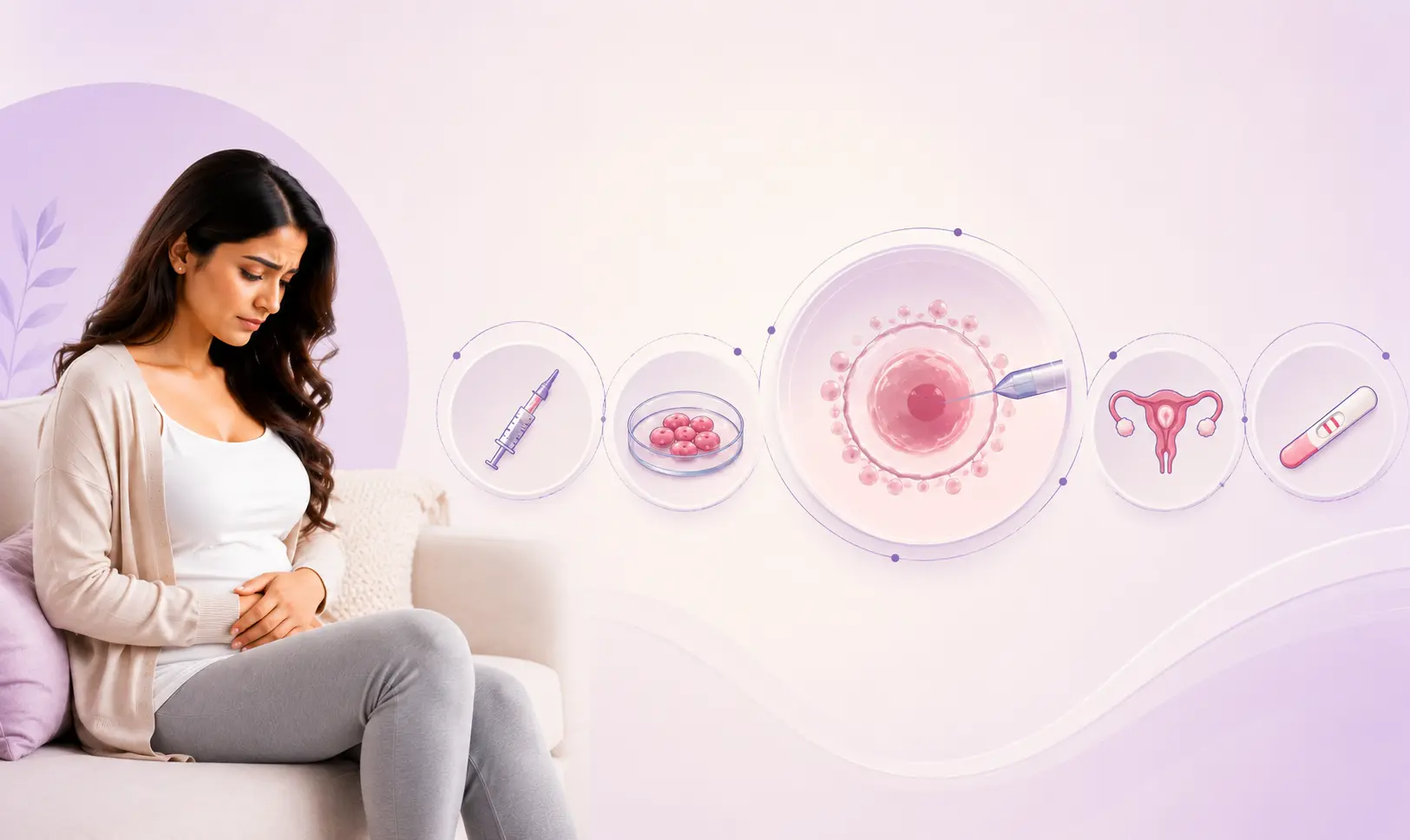
In vitro fertilization, or IVF, involves collecting eggs from the ovaries and fertilizing them with sperm in a laboratory. The resulting embryos are monitored as they develop. A suitable embryo is then transferred into the uterus.The process usually involves ovarian stimulation, monitoring, egg retrieval, fertilization and embryo development, followed by embryo transfer. Depending on the treatment plan, suitable embryos may also be frozen for future use.The important thing to know is that IVF is not continuously painful. The physical discomfort usually comes from injections, the body’s response to fertility medication, or specific procedures. The level of discomfort can also vary based on your treatment protocol and individual response.Step 1: Ovarian Stimulation
Ovarian stimulation is the first major physical stage of IVF. Fertility medications help the ovaries develop multiple follicles so that several eggs can potentially be collected. The medications are usually given as injections over several days.Are IVF injections painful?
Most patients feel a brief pinch or sting when the injection is given. Mild soreness, redness, or bruising can also occur at the injection site.As the follicles grow, you may notice other changes, including:- Bloating
- Mild pelvic pressure
- Abdominal fullness
- Mild cramping
- Breast tenderness
- Tiredness
Step 2: Monitoring Scans
Monitoring is an important part of ovarian stimulation. Ultrasound scans and blood tests help the fertility team see how the follicles are developing and decide when the eggs are ready for retrieval.A transvaginal ultrasound may feel slightly uncomfortable because the ultrasound probe is inserted into the vagina. You may feel some pressure, particularly when the ovaries are enlarged.The scan itself is usually brief. Blood tests may cause the usual short-lived discomfort associated with a needle.These checks are not another treatment procedure. They help your doctor monitor your response and adjust your medication when needed.Step 3: Trigger Injection
Once the follicles are ready, you will receive a trigger injection. It helps the eggs complete their final maturation before egg retrieval.The injection may cause the same brief sting or soreness as other IVF injections. Some patients may also notice mild bloating or pelvic discomfort.The timing of this injection is important. Your fertility team will give you specific instructions about when to take it before egg retrieval.Step 4: Egg Retrieval
Egg retrieval is the stage many patients worry about most. The procedure itself is generally performed under sedation or anesthesia, so you should not feel the egg collection while it is taking place.During the procedure, the doctor uses ultrasound guidance to collect mature eggs from the follicles using a fine needle. The procedure is usually completed within a short period.What can you feel after egg retrieval?
Once the sedation wears off, some patients experience:- Mild to moderate lower abdominal cramps
- Pelvic soreness or pressure
- Bloating
- Tiredness or grogginess
- Light vaginal spotting or blood-stained discharge
Step 5: Fertilization and Embryo Development
There is no physical pain during fertilization or embryonic development because these processes occur in the laboratory.After retrieval, the eggs are assessed and fertilized with sperm. Depending on the treatment plan, conventional IVF or ICSI may be used. The embryos are then monitored as they develop.For the patient, this stage is mainly about waiting for updates from the embryology team.No procedure is being performed on your body during this time.Step 6: Embryo Freezing
Embryo freezing itself does not cause physical discomfort because it takes place in the laboratory.Suitable embryos can be preserved through vitrification and stored for future treatment. Depending on your treatment plan, your doctor may recommend transferring an embryo in the same cycle or using a frozen embryo transfer later.It is useful to distinguish the two. Freezing an embryo does not involve a procedure on your body. A later frozen embryo transfer is a separate step and may involve medication to prepare the uterine lining.Step 7: Embryo Transfer
Embryo transfer is usually one of the simpler physical steps of IVF. A thin catheter is gently passed through the cervix and into the uterus to place the embryo.Does embryo transfer hurt?
For most patients, embryo transfer causes little or no pain. Some may feel mild pressure, brief cramping, or discomfort similar to a gynecological examination. Routine anesthesia is generally not required for embryo transfer.The procedure is usually brief, and you can generally return home afterward according to your clinic’s instructions.What Can You Feel After Embryo Transfer?
Mild symptoms can occur after embryo transfer, but they cannot confirm whether implantation has happened.You may notice:- Mild cramping
- Bloating
- Pelvic heaviness
- Breast tenderness
- Light spotting
Which Part of IVF Is Usually the Most Uncomfortable?
There is no single answer because every patient’s experience is different.For some, the repeated injections are the most bothersome. Others notice more discomfort from bloating and pelvic pressure during ovarian stimulation. Egg retrieval itself is generally well tolerated because sedation or anesthesia is used, although recovery can involve temporary cramping and soreness.Embryo transfer is usually one of the least uncomfortable physical procedures.So, while IVF pain is possible, most discomfort is temporary and linked to specific stages rather than the entire treatment.What Can Help in Managing Discomfort During IVF Treatment?
A few simple measures can help:- Follow your medication and injection instructions carefully.
- Ask your fertility team if you are unsure about injection technique.
- Wear loose clothing if bloating becomes uncomfortable.
- Rest after egg retrieval as advised by your doctor.
- Stay hydrated according to your doctor’s recommendations.
- Take only pain medication approved by your fertility team.
- Let your clinic know if symptoms become stronger or unusual.
When Should You Contact Your IVF Doctor About Pain?
Mild discomfort can occur during IVF, but severe, worsening, or unusual symptoms need medical attention.Contact your fertility team if you experience:- Severe or increasing abdominal pain
- Significant abdominal swelling or bloating
- Heavy vaginal bleeding
- Persistent vomiting
- Feeling faint or unusually weak
- Difficulty breathing
- Reduced urination
- Fever or feeling unwell
FAQs
A typical IVF cycle involves several stages over several weeks, including ovarian stimulation, monitoring, egg retrieval, embryo development, and transfer. The exact timeline varies depending on your treatment plan.
Most patients can continue their usual routine during ovarian stimulation, although frequent monitoring appointments may need some planning. You may need to take time off around egg retrieval, particularly because of sedation or anesthesia. Your doctor can advise you based on your treatment and how you feel.
Travel may be possible during some parts of IVF, but the timing of monitoring appointments and procedures needs to be considered. Travel may also need to be limited around egg retrieval or if you develop significant symptoms.
Routine prolonged bed rest is generally not required after embryo transfer. Your clinic may recommend avoiding strenuous activity and following specific instructions based on your treatment.
IVF injections may cause a brief pinch, sting, bruising, or soreness at the injection site. The discomfort is generally short-lived.