
Day 3 vs Day 5 (Blastocyst) Embryo Transfer: Which Is Better for IVF?
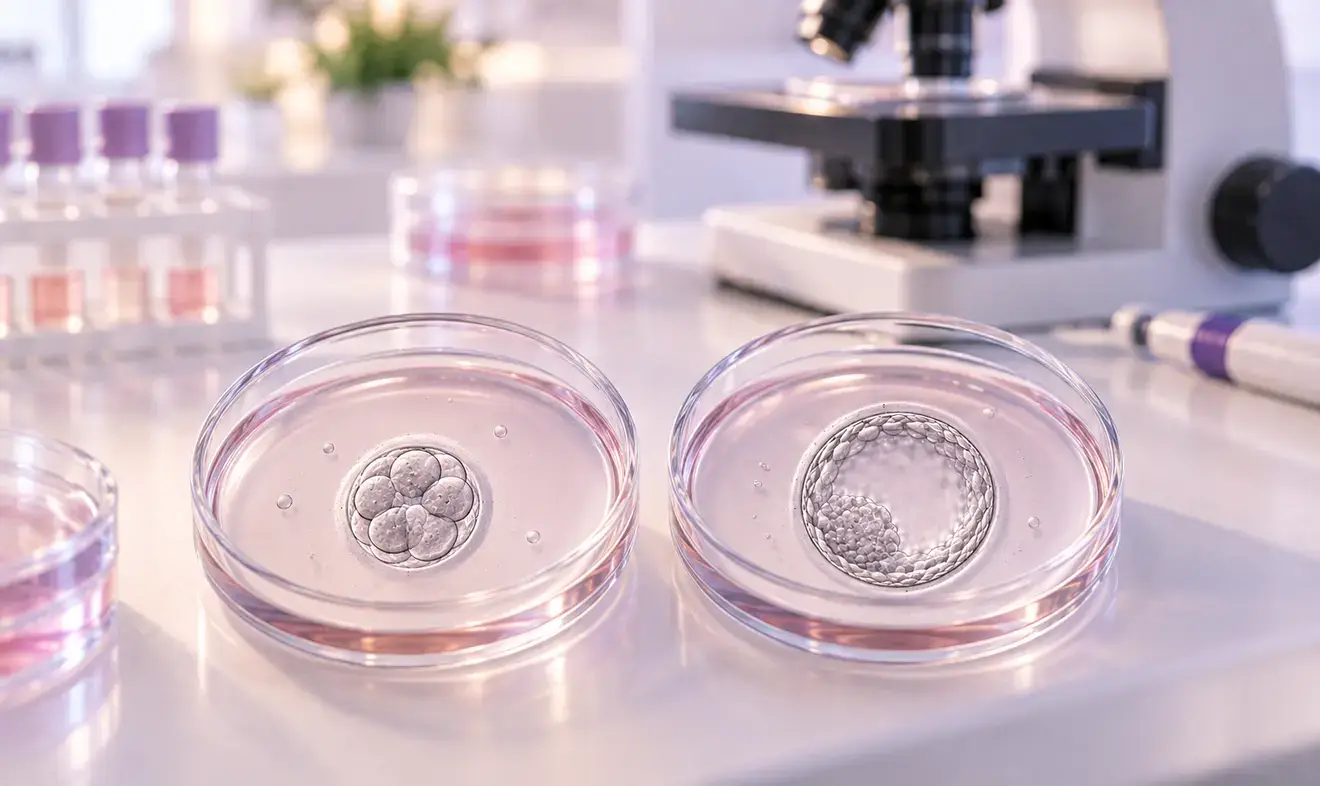
Neither Day 3 nor Day 5 embryo transfer is universally better for IVF. The right choice depends on embryo development, the number and quality of embryos available, and individual factors that may affect the treatment plan.
Many couples understandably focus on egg retrieval and fertilization, but embryo development and transfer timing are equally important parts of the IVF process. A Day 5 transfer allows embryos to develop to the blastocyst stage before transfer, while Day 3 transfer takes place earlier in embryo development.
At Archish Fertility & IVF Clinic in Bengaluru, our embryologists assess the individual IVF cycle, embryo development, and clinical factors before recommending the most appropriate transfer strategy. The approach is personalized rather than based on a fixed preference for Day 3 or Day 5.
In this article, we will explore Day 3 and Day 5 embryo transfers, including their success rates, advantages, and limitations, to help you better understand your options before starting IVF.
What is Embryo Culture, and How is it Related to Embryo Transfer?
After fertilization, the fertilized egg needs to continue developing before it can be transferred to the uterus. Embryo culture is the laboratory process in which embryologists support this development outside the body under carefully controlled conditions, including temperature, gases, and nutrients.
During these first few days, the embryo grows and divides from a single fertilized cell into multiple cells. This development happens in stages. Around Day 3, the embryo is usually at the cleavage stage, when it has undergone several rounds of cell division. By around Day 5, some embryos develop further into a blastocyst, a more advanced stage with distinct cell groups.
This is where the difference between day 3 vs day 5 embryo transfer comes in. Day 3 and Day 5 are two points at which an embryo may be considered for transfer. The appropriate timing depends on how the embryos are developing and the overall IVF treatment plan.
What is a Day 3 Embryo Transfer?
A Day 3 embryo transfer involves transferring an embryo into the uterus about three days after fertilization. By this stage, the embryo has usually divided into around 6 to 8 cells and is known as a cleavage-stage embryo.
The embryology team evaluates the embryo based on factors such as cell number, cell appearance, and fragmentation. Fragmentation refers to small pieces of cell material between the embryo’s cells and is considered when assessing embryo quality.
With a Day 3 transfer, the embryo is returned to the uterus before it reaches the blastocyst stage. This gives the embryo less time in laboratory culture and allows transfer at an earlier stage of development.
What is a Day 5 (Blastocyst) Embryo Transfer?
A Day 5 embryo transfer, also called a day 5 blastocyst transfer, involves transferring an embryo that has continued developing in the laboratory to the blastocyst stage.
A blastocyst has two important cell groups:
- Inner cell mass (ICM): develops into the fetus
- Trophectoderm: contributes to the placenta and other supporting tissues
The embryo also develops a fluid-filled cavity and expands within its surrounding shell. Embryologists assess these features when performing embryo grading.
Waiting until Day 5 allows the laboratory team to see which embryos continue developing to the blastocyst stage. However, some embryos that appear suitable earlier may stop developing before Day 5. This means extended culture can also result in fewer embryos being available for transfer or freezing.
What is the Difference between Day 3 and Day 5 Embryo Transfer?
Day 3 and Day 5 transfers differ mainly in the embryo’s developmental stage, the information available for selection, and how long the embryo is cultured in the lab.
| Factor | Day 3 Embryo Transfer | Day 5 Embryo Transfer |
|---|---|---|
| Embryo stage | Cleavage-stage embryo, usually around 6 to 8 cells | Blastocyst stage, with an inner cell mass and trophectoderm |
| Timing | About 3 days after fertilization | About 5 days after fertilization |
| Development assessed | Cell number, cell appearance, and fragmentation | Blastocyst expansion, inner cell mass, and trophectoderm |
| Time in the lab | Shorter culture period | Two additional days of embryo culture |
| Embryo selection | Selection is based on earlier-stage development | Continued development to the blastocyst stage provides additional information |
| Potential limitation | Less information is available about later embryo development | Some embryos may stop developing before reaching the blastocyst stage |
| Freezing | Suitable embryos may be cryopreserved based on their development and laboratory protocol | Suitable blastocysts can be cryopreserved for future transfer |
| Transfer approach | Transfer takes place at an earlier developmental stage | Transfer takes place after the embryo reaches the blastocyst stage |
A Clinical Research on Day 3 & Day 5 Embryo Transfer Success Rates
There is no single day 3 vs day 5 embryo transfer success rate that applies to every IVF cycle. Outcomes can vary with embryo number and quality, age, fertility history, and other treatment factors. So, the transfer day alone cannot predict the chance of pregnancy or live birth.
A 2023 retrospective study published in JBRA Assisted Reproduction and indexed on PubMed compared Day 3 and Day 5 fresh embryo transfers in 266 patients undergoing ICSI. The researchers found no statistically significant difference in clinical pregnancy, implantation, multiple pregnancy, or live birth rates between the two groups. However, the Day 3 group had more embryos transferred on average.
The study also has an important limitation: patients were not randomly assigned. The Day 5 group was selected from patients with more than five good-quality embryos on Day 3. This means the findings mainly apply to patients who had enough embryos to continue culture to the blastocyst stage. Overall, the study supports a more individualized approach rather than assuming that Day 5 is always better than Day 3.
You can read the Clinical Research here.
What are the Advantages and Disadvantages of Day 3 Embryo Transfer?
A Day 3 embryo transfer is not inherently better or worse than a Day 5 transfer. It may be considered when an earlier transfer is appropriate based on embryo development and the overall IVF cycle.
Advantages
- Shorter Culture Period: The embryo is transferred before extended culture to the blastocyst stage.
- Earlier Transfer: The fertility team may choose an earlier transfer when only a small number of embryos are developing.
- Useful with Fewer Embryos: Suitable embryos do not need to reach the blastocyst stage before transfer.
Disadvantages
- Less Developmental Information: At Day 3, embryologists cannot assess whether an embryo will continue developing to the blastocyst stage.
- Limited Selection for Blastocyst-stage: Embryologists have fewer developmental milestones to assess compared with a Day 5 transfer.
- Cleavage-stage Assessment has Limitations: Cell number, appearance, and fragmentation provide useful information, but they cannot fully predict an embryo’s later developmental potential.
What are the Advantages and Disadvantages of Day 5 Embryo Transfer?
A Day 5 embryo transfer is not automatically better than a Day 3 transfer. It may be considered when embryos continue to develop well, and reaching the blastocyst stage provides useful information for the transfer decision.
Advantages
- More Developmental Information: Embryologists can assess the embryo after it reaches the blastocyst stage.
- More Informed Selection: Blastocyst development provides additional factors for selecting an embryo for transfer.
- Supports Single Embryo Transfer: A suitable blastocyst can often be selected for transfer, which can help reduce the risk of multiple pregnancy.
Disadvantages
- Not Every Embryo Reaches Day 5: Some embryos may stop developing before reaching the blastocyst stage.
- Fewer Embryos May Be Available: Extended culture can result in fewer embryos being available for transfer or freezing.
- Requires Extended Culture: The embryo needs to remain in the laboratory for two additional days under controlled conditions.
Who May Be Suitable for Day 3 or Day 5 Embryo Transfer?
There is no universal rule for choosing between embryo transfer on Day 3 or Day 5.
Your fertility specialist may consider:
- Number of fertilized eggs and developing embryos
- Embryo development and quality
- Age and fertility history
- Previous IVF outcomes
- Laboratory experience with extended embryo culture
- Whether genetic testing is planned
- Availability of embryos for freezing
For some patients, extending culture to Day 5 provides useful information. For others, an earlier transfer may be considered based on the overall treatment picture.
How Do Embryologists Decide Between A Day 3 and Day 5 Transfer?
Embryologists consider how many embryos are developing, their quality and development on Day 3, and the overall clinical picture before recommending when to transfer.
- Embryo Count: The number of fertilized and developing embryos helps determine whether extended culture to Day 5 is appropriate.
- Embryo Quality: Day 3 grading, including cell number and fragmentation, provides information about development.
- Continued Development: If embryos are allowed to develop to Day 5, reaching the blastocyst stage provides additional information for selection.
- Fertility History: Age, previous IVF cycles, and individual fertility factors may also influence the decision.
The goal is to choose the transfer stage that fits your specific IVF cycle, rather than following a fixed Day 3 or Day 5 approach.
What Happens If an Embryo Does Not Reach the Blastocyst Stage?
Not every embryo continues developing to the blastocyst stage. If an embryo stops developing during extended culture, it generally cannot be transferred or frozen.
The embryology team continues to monitor embryo development and assesses whether any embryos reach a suitable blastocyst stage for transfer or cryopreservation. If no embryo reaches this stage, the fertility team discusses the outcome and considers the next steps based on the individual IVF cycle.
This is an important consideration when choosing between Day 3 and Day 5 embryo transfer, particularly when only a small number of embryos are available.
Can You Have a Successful Pregnancy With a Day 3 Embryo?
Yes. A Day 3 embryo can result in a pregnancy and live birth.
The timing of transfer is only one part of the picture. Embryo development, maternal age, uterine factors, and other clinical factors also influence IVF outcomes. A Day 3 transfer should not automatically be viewed as a sign of lower-quality treatment.
Can a Day 5 Blastocyst Be Frozen for Future IVF?
Yes. A suitable Day 5 blastocyst can be frozen through vitrification, a rapid freezing method used to preserve embryos for future transfer.
Once frozen, the blastocyst can be stored and later thawed for a frozen embryo transfer (FET). This allows couples to use a suitable embryo in a future cycle without undergoing another egg retrieval.
The ability to freeze a blastocyst also allows suitable embryos that are not transferred in the current cycle to be preserved for future pregnancy attempts.
Day 3 vs Day 5 Embryo Transfer: What Should You Choose?
There is no single answer to whether Day 3 or Day 5 embryo transfer is better. A Day 5 blastocyst transfer can offer additional information about embryo development, while a Day 3 transfer remains a suitable option in certain IVF cycles.
At Archish Fertility and IVF Clinic, the focus is on making the transfer decision clear for each couple. Your fertility team will explain why a particular approach may be recommended and what it means for your treatment journey.
FAQs
Not for everyone. Day 5 transfer may offer advantages in suitable patients, but some embryos may not reach the blastocyst stage.
No. Embryo grading assesses morphology. It cannot determine whether an embryo has a chromosomal abnormality. Genetic testing provides different information.
A Day 3 transfer may be considered when embryo numbers, development, or individual treatment factors make earlier transfer appropriate.
Blastocyst transfer can have higher implantation rates in some patient groups, but implantation also depends on embryo and patient factors.
Yes. Suitable cleavage-stage embryos can be cryopreserved, depending on their development and the laboratory's protocol.