Fertility Assessment Before IVF: Which Tests Should Couples Take First?
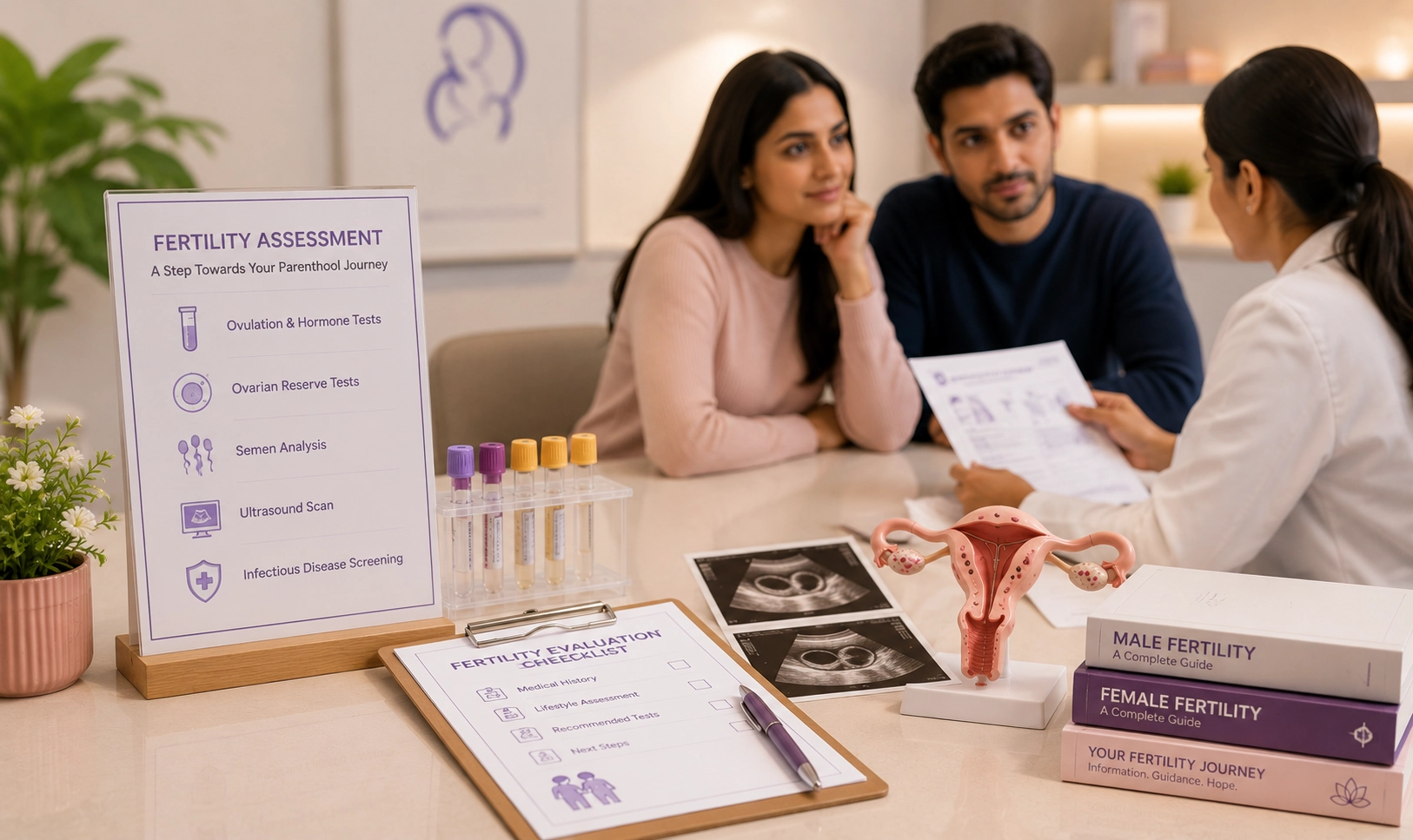
A fertility assessment before IVF helps identify potential fertility challenges and guides treatment planning. The most common pre-IVF tests include AMH testing, hormone profiling, pelvic ultrasound, semen analysis, infectious disease screening, and selected genetic tests. Together, these pre-IVF tests provide a complete picture of reproductive health for both partners.
This article explains which fertility tests couples should take before IVF, why pre-IVF tests are important, and what happens after the IVF test results are reviewed.
At Archish IVF and Fertility Clinic, Bangalore, our fertility specialists help determine which tests are needed. They also explain what the results mean and how they influence your personalized IVF treatment plan.
Why is a Fertility Assessment Test Before IVF Important?
IVF, or In Vitro Fertilization, is a process where eggs and sperm are combined outside the body to create embryos, which are then transferred to the uterus. It is one of the most advanced assisted reproductive technologies available today.
Yet, for many couples, deciding to start IVF comes with a mix of hope, anxiety, and uncertainty. Questions like Why am I not conceiving?, Is the issue with my partner or me?, and Which treatment is right for us? are common.
Fertility tests before starting the IVF procedure are important because they:
- Help identify factors affecting fertility.
- Evaluate egg reserve and sperm health.
- Detect hormonal or reproductive health concerns.
- Assess the uterus and ovaries before treatment.
- Support a personalized IVF treatment plan.
- Help avoid unnecessary delays during treatment.
- Provide clarity and confidence before starting IVF
- Ensure that treatment decisions are based on your unique fertility profile rather than assumptions.
What Female Fertility Tests Are Recommended Before IVF?
Female fertility tests help fertility specialists evaluate several aspects of a woman’s reproductive health. This includes the quantity of eggs available, how well the ovaries are functioning, whether ovulation and hormone levels are normal, and if the uterus is prepared to support implantation.
The following are common female fertility tests:
Test 1: Ovarian Reserve Testing
Ovarian reserve refers to the number and quality of a woman’s eggs. This test tells doctors the number of eggs that can be retrieved, how the ovaries will respond to fertility medications, and what stimulation dosage to start with.
Tests include:
- AMH (Anti-Mullerian Hormone): A blood test that measures the hormone produced by small follicles in the ovaries. AMH is the most reliable marker of ovarian reserve. A higher AMH generally means a better egg supply.
- Day 2 or Day 3 FSH (Follicle Stimulating Hormone): This blood test is done on the second or third day of the menstrual cycle. A high FSH level can indicate that the ovaries are working harder than they should, which often points to a lower reserve.
- Estradiol (E2): Also done on Day 2 or 3 alongside FSH. Abnormal estradiol levels can affect the accuracy of the FSH reading and indicate early follicular activity.
Test 2: Pelvic Ultrasound and Antral Follicle Count (AFC)
A pelvic ultrasound helps assess the ovaries and uterus, while the AFC measures the number of resting follicles in the ovaries. This test helps identify a uterus with structural issues or a low follicle count before the IVF cycle begins.
These tests help:
- Count the small resting follicles visible in both ovaries
- Assess the shape, size, and lining of the uterus
- Estimate ovarian reserve
- Detect ovarian cysts, fibroids, polyps, or other uterine abnormalities
Test 3: Hormone Profile Testing
Hormones can help in recognizing ovulation cycles and the cause of infertility. Even a small hormonal imbalance can have a significant impact on IVF outcomes.
These tests include:
- LH (Luteinizing Hormone): Works with FSH to trigger ovulation. An imbalanced LH-to-FSH ratio can indicate PCOS.
- Prolactin: High prolactin levels can suppress ovulation and affect the menstrual cycle. This is treatable once identified.
- Thyroid (TSH): Thyroid conditions, both hypothyroidism and hyperthyroidism, can interfere with conception and increase the risk of miscarriage. TSH must be within the optimal range before IVF.
- Progesterone: Assessed during the second half of the cycle to confirm ovulation and check luteal phase health.
Test 4: Uterine Assessment
For successful embryo implantation, the uterine cavity must be clear and healthy. The tests done to assess are:
- Hysteroscopy: A thin camera is inserted through the cervix to view the inside of the uterus directly.
- Sonohysterography (SHG): Saline is used to expand the uterus during an ultrasound, giving a clearer view of the uterine cavity.
- Endometrial evaluation: The thickness and pattern of the uterine lining are assessed to determine if it can support implantation.
These tests help identify:
- Polyps or fibroids inside the uterus
- Scar tissue (Asherman syndrome)
- Congenital abnormalities such as a septum or bicornuate uterus
Test 5: Infectious Disease Screening
Before starting IVF, both partners are screened for certain infections. This is a standard protocol followed by all reputable fertility clinics.
Common screenings include:
- HIV
- Hepatitis B
- Hepatitis C
- Syphilis
- Rubella immunity (for women)
Which Male Fertility Tests Are Recommended Before IVF?
Fertility tests for men help fertility specialists evaluate sperm health, reproductive function, and other factors that may affect fertilization. The results can also help determine whether additional support, such as ICSI or advanced fertility treatments, may be beneficial during the IVF process.
The following are common male fertility tests:
Test 1: Semen Analysis
Semen analysis is the first and most important male fertility test before IVF. The results provide valuable insights into overall sperm health and fertility potential.
It evaluates:
- Sperm Count: The number of sperm present per milliliter of semen.
- Sperm Motility: The percentage of sperm that are moving and swimming in the right direction.
- Sperm Morphology: The shape and structure of the sperm cells.
- Semen Volume: The total amount of semen produced.
Test 2: Advanced Sperm Testing
In some cases, fertility specialists may recommend additional tests to get a deeper understanding of sperm quality. These tests are typically recommended for couples with recurrent pregnancy loss, unexplained infertility, or previous unsuccessful IVF cycles.
These tests include:
- DNA Fragmentation Testing: This test assesses whether the genetic material in sperm is intact. High DNA fragmentation can affect fertilization and embryo quality, even when the basic semen analysis looks normal.
- Sperm Vitality Assessment: Determines what percentage of sperm are alive, even if they are not moving. This helps differentiate between dead sperm and immotile but viable sperm.
Test 3: Male Hormone Testing
If the semen analysis shows a low sperm count or other issues, a hormonal evaluation helps find the cause.
Tests include:
- Testosterone: The primary male reproductive hormone. Low levels can affect sperm production.
- FSH (Follicle Stimulating Hormone): High FSH in men often indicates a problem with sperm production at the testicular level.
- LH (Luteinizing Hormone): Works with testosterone to regulate sperm production.
Key Fertility Markers and Their Reference Ranges
While fertility test results should always be interpreted by a specialist, understanding a few key parameters can help couples better navigate their fertility assessment before IVF.
The table below highlights commonly evaluated markers and what their results may indicate.
| Parameter | Optimal Range | Below Optimal | What It May Indicate |
|---|---|---|---|
| AMH (Anti-Müllerian Hormone) | 1.0 to 3.5 ng/mL | Below 1.0 ng/mL | Low ovarian reserve; fewer eggs retrievable |
| Day 3 FSH | 3 to 10 mIU/mL | Above 10 mIU/mL | Reduced ovarian response expected |
| Antral Follicle Count (AFC) | 10 or more follicles (both ovaries) | Below 5 to 7 total | Low reserve; poor response to stimulation |
| Sperm Count | Above 15 million per mL | Below 15 million per mL | Oligospermia; ICSI may be recommended |
| Sperm Motility | Above 40% total motility | Below 40% | Reduced fertilization potential |
Note: These are general reference ranges. Fertility specialists interpret test results based on age, medical history, fertility goals, and overall reproductive health.
What are the Additional Fertility Assessment Tests Recommended Before IVF?
Not every couple requires advanced fertility testing before IVF. However, depending on your medical history, age, previous pregnancy outcomes, or earlier fertility treatments, your specialist may recommend additional investigations to gather more detailed information.
Test 1: Genetic Carrier Screening
Genetic carrier screening helps identify whether either partner carries inherited genetic conditions that could be passed on to a child. The results can help couples make informed decisions about family planning and treatment options.
Test 2: Karyotype Testing
Karyotype testing examines the number and structure of chromosomes. It may be recommended for couples with:
- Recurrent pregnancy loss
- Previous failed IVF cycles
- A family history of genetic disorders
Test 3: Tubal Assessment Tests
While IVF bypasses the fallopian tubes, assessing tubal health can still be important in certain cases.
Common tests include:
- HSG (Hysterosalpingography)
- Other specialized imaging studies
The above tests help identify blockages, structural abnormalities, or conditions that may affect fertility or treatment planning.
Which Health Screening Tests Are Recommended for Both Partners?
Fertility is closely linked to overall health. Along with reproductive testing, fertility specialists may recommend a few general health screenings for both partners before IVF.
The tests below help identify underlying health conditions that could affect fertility, pregnancy, or treatment outcomes:
| Health Screening Test | Why It Matters Before IVF |
|---|---|
| Blood Sugar (HbA1c) | Helps identify diabetes or insulin resistance that may affect fertility and pregnancy. |
| Complete Blood Count (CBC) | Detects anemia, infections, and other blood-related conditions. |
| Thyroid Profile | Evaluates thyroid function, which plays an important role in reproductive health. |
| Vitamin D Levels | Low levels have been associated with fertility and pregnancy concerns. |
| Blood Group & Rh Factor | Supports pregnancy planning and helps identify potential Rh incompatibility. |
| Lipid Profile | Assesses metabolic health and identifies cardiovascular risk factors. |
What is the Typical Timeline for Fertility Testing Before IVF?
A common concern most families and couples have is, How much time does it typically take to conduct the pre-IVF fertility tests? The following table serves as a timeline guide:
| Test Category | Typical Turnaround Time |
|---|---|
| Hormone Blood Tests | 1-3 days |
| AMH Test | 2-5 days |
| Semen Analysis | Same day to 3 days |
| Pelvic Ultrasound & AFC | Same day |
| Infectious Disease Screening | 2-7 days |
| Genetic Testing | 2-4 weeks |
Note: While some results are available quickly, others may take longer. Once all reports are ready, your fertility specialist reviews the findings and discusses the next steps for treatment.
What Happens After Your Fertility Test Results Are Ready?
Once all test results are available, your fertility specialist reviews them to understand your overall fertility profile and identify any factors that may affect treatment.
Based on the findings, the next steps may include:
- Reviewing and explaining the test results in detail.
- Identifying any fertility concerns that require attention.
- Recommending the most suitable fertility treatment approach.
- Creating a personalized IVF treatment plan.
- Discussing medication protocols and treatment timelines.
- Addressing lifestyle or health factors that may impact outcomes.
- Providing a cost estimate and treatment roadmap.
At Archish IVF and Fertility Clinic, Bangalore, our fertility specialists help couples understand their results, answer their concerns, and create a personalized treatment plan based on their unique fertility needs.
If you are planning IVF and would like expert guidance on the right tests and next steps, schedule a consultation with our team to begin your fertility journey with clarity and confidence.
FAQs
Fertility tests do not determine IVF success on their own, but they help fertility specialists identify factors that may influence treatment outcomes and create a more personalized treatment plan.
AMH is one of the most informative tests for ovarian reserve, but it is not the only one. Doctors use AMH alongside AFC, FSH, and estradiol to get a complete picture. No single test tells the full story.
In many cases, yes. Some abnormal results may require additional treatment, medication, or monitoring before IVF begins. Your fertility specialist will recommend the most appropriate next steps.
Yes. Factors such as smoking, excessive alcohol consumption, obesity, stress, poor sleep, and certain medical conditions can affect fertility health and may influence some test results.
Couples under 35 are generally advised to seek evaluation after one year of trying to conceive without success. For women aged 35 and above, fertility testing is often recommended after six months of unsuccessful attempts.