Endometriosis and Infertility: When Should You Visit a Fertility Specialist?
What is Endometriosis?
Endometriosis is a condition in which tissue similar to the lining of the uterus grows outside the uterus. These tissue growths are commonly found on the ovaries, fallopian tubes, outer surface of the uterus, pelvic lining, and, in some cases, nearby organs.Like the uterine lining, these tissues respond to hormonal changes during every menstrual cycle. However, unlike menstrual blood that leaves the body, this tissue has no way to exit. Over time, it can lead to inflammation, scar tissue, pelvic adhesions, ovarian cysts called ovarian endometriomas, and chronic pelvic pain.While pain is the most recognized symptom, many women discover they have endometriosis only when they struggle to conceive. The condition can affect egg quality, damage the fallopian tubes, or change the pelvic environment, making pregnancy more difficult for some women.The positive news is that an early endometriosis diagnosis and timely treatment can help protect fertility and improve your chances of a healthy pregnancy.What are the Stages of Endometriosis?
Doctors classify endometriosis into four stages based on the location, depth, and extent of the tissue growth, along with the amount of scar tissue present.The following table classifies the stages of endometriosis and how it affects fertility:| Stage | Severity | What it means | Impact on fertility |
|---|---|---|---|
| Stage I | Minimal | A few small, superficial implants with little or no scar tissue | Most women can still conceive naturally. |
| Stage II | Mild | More tissue growth with slightly deeper implants | Fertility may begin to decline in some women. |
| Stage III | Moderate | Presence of ovarian endometrioma and pelvic adhesions that may affect the ovaries or fallopian tubes | Natural conception may become more difficult, depending on the extent of the disease. |
| Stage IV | Severe | Extensive scar tissue, large ovarian cysts, distorted pelvic anatomy, and possible fallopian tube blockage | Pregnancy is still possible, but many women benefit from fertility treatments such as IVF for endometriosis. |
What Causes Endometriosis?
The exact cause of endometriosis is still unknown. Researchers believe it develops due to a combination of hormonal, genetic, immune, and environmental factors. Some of the most common possible causes include:- Retrograde Menstruation: Menstrual blood flows backward through the fallopian tubes into the pelvic cavity instead of leaving the body.
- Family History: Having a mother or sister with endometriosis may increase your risk.
- Hormonal Imbalance: Higher estrogen levels can encourage the growth of endometriosis tissue.
- Immune System Changes: A weakened immune response may not clear endometrial-like tissue growing outside the uterus.
- Genetics: Certain genes may make some women more likely to develop the condition.
- Previous pelvic surgery: In rare cases, endometrial-like tissue may develop around surgical scars after procedures such as a cesarean section.
What are the Signs that you have Endometriosis?
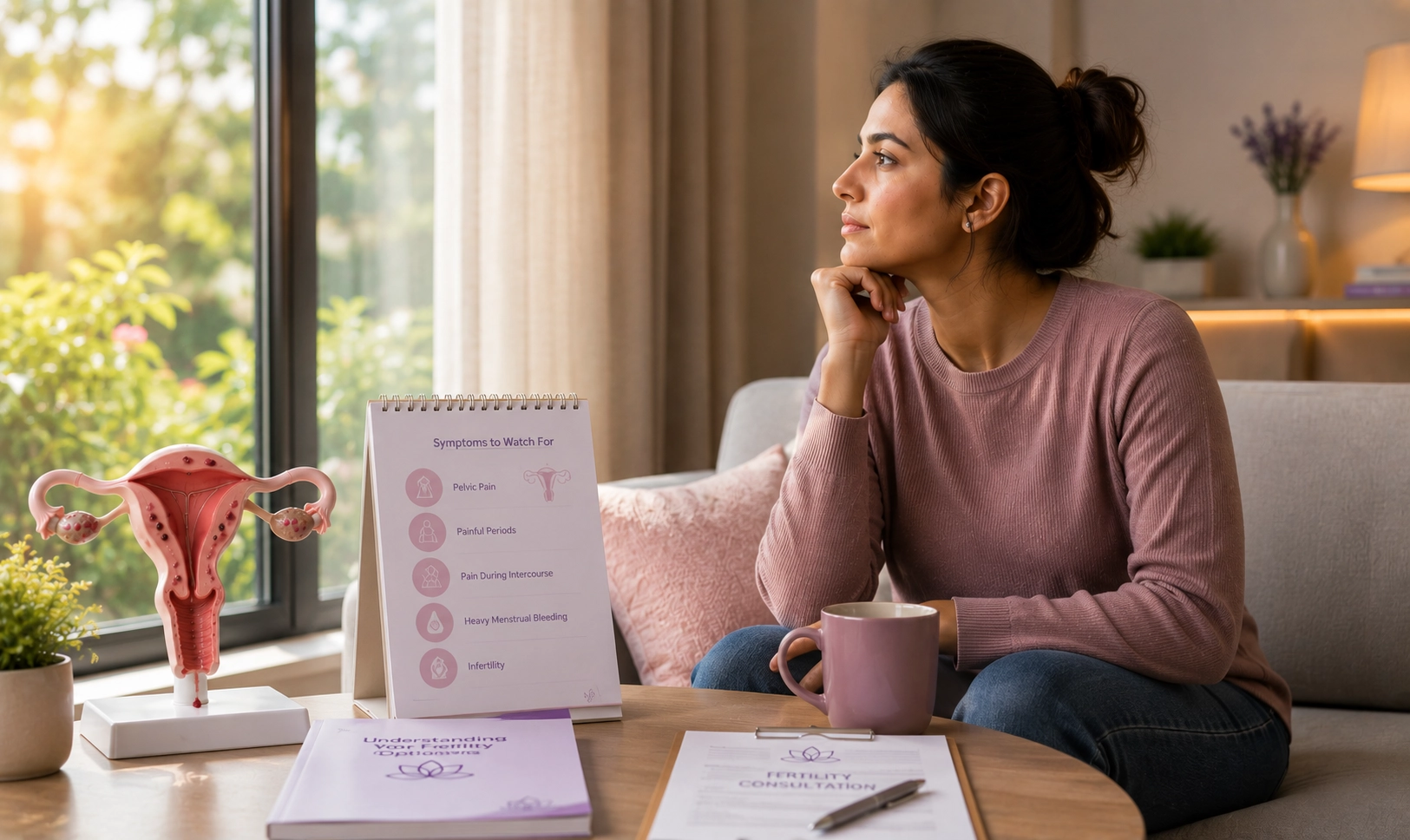
The symptoms of endometriosis vary from one woman to another. Some experience severe pain that affects daily life, while others have few or no symptoms until they begin trying to conceive.Common signs include:- Severe menstrual cramps that do not improve with pain medication
- Chronic pelvic pain
- Pain during or after sexual intercourse
- Pain while passing urine or bowel movements during periods
- Heavy or irregular menstrual bleeding
- Bloating, constipation, or diarrhea during periods
- Fatigue, especially during menstruation
- Lower back pain
- Difficulty getting pregnant
How is Endometriosis Diagnosed?
There is no single test that confirms endometriosis. Multiple tests, such as the following, are required for a complete endometriosis diagnosis:| Step | What your doctor checks |
|---|---|
| Medical History | Your menstrual cycle, pelvic pain, family history, previous pregnancies, and how long you have been trying to conceive. |
| Pelvic Examination | To check for tenderness, cysts, or abnormalities in the pelvic region. |
| Ultrasound Scan | Helps detect ovarian endometrioma and other visible changes in the ovaries. |
| MRI Scan | May be recommended to understand the extent of deep endometriosis before treatment. |
| Laparoscopy | A minimally invasive procedure that allows doctors to confirm endometriosis and, in many cases, treat it during the same procedure. It remains the most accurate way to diagnose the condition when required. |
- Ovarian reserve testing to evaluate egg quantity
- Hormone blood tests
- Tests to check whether the fallopian tubes are open
- Semen analysis for your partner
How does Endometriosis Affect Fertility?
It is possible to get pregnant with endometriosis. However, the condition can affect fertility in several ways:- It may block the fallopian tubes: Scar tissue and pelvic adhesions can distort the pelvic organs or cause fallopian tube blockage. This can make it difficult for the sperm and egg to meet naturally.
- It can affect egg quality: Endometriosis may create an inflammatory environment around the ovaries, which can affect egg quality in some women. Women with an ovarian endometrioma may also experience a reduction in healthy ovarian tissue over time.
- It may reduce ovarian reserve: Repeated inflammation, cysts, or previous laparoscopic surgery for endometriosis can sometimes reduce the ovarian reserve, meaning the number of eggs available for future pregnancy.
- It can make implantation more difficult: Inflammation caused by endometriosis may affect the uterine environment, making it less likely for a fertilized egg to implant successfully.
- It often delays pregnancy: Some women continue trying naturally for years without realizing that endometriosis is affecting their fertility. As age increases, fertility naturally declines, making timely treatment even more important.
Why is IVF Recommended for Women with Endometriosis?
Although treatment is personalized, IVF for endometriosis is often recommended because it can bypass some of the challenges caused by the condition.IVF may help by:- Bypassing damaged or blocked fallopian tubes
- Reducing the impact of pelvic adhesions on fertilization
- Improving the chances of fertilization in a controlled laboratory setting
- Offering a better chance of pregnancy for women with moderate to severe endometriosis
- Helping couples who have experienced repeated unsuccessful attempts to conceive
When Should You Visit a Fertility Specialist for Endometriosis?
If you have endometriosis, do not wait until pregnancy becomes difficult. The right time to consult a fertility specialist depends on your symptoms, age, and how long you have been trying to conceive.Use the guide below to understand when it may be time to seek expert care.| If your situation is… | It is a good time to see a fertility specialist because… |
|---|---|
| You have been trying to conceive for more than 12 months (or 6 months if you are over 35) | A fertility evaluation can identify whether endometriosis is affecting your chances of pregnancy. |
| You have been diagnosed with an ovarian endometrioma | Your doctor can assess whether it is affecting your ovarian reserve or if treatment is needed before pregnancy. |
| You have severe pelvic pain or painful periods | Persistent symptoms may indicate moderate to severe endometriosis that requires further evaluation. |
| You have a fallopian tube blockage or significant pelvic adhesions | Your specialist can discuss whether IVF may offer a better chance of pregnancy than trying naturally. |
| You have experienced repeated miscarriages or failed pregnancy attempts | A detailed fertility workup can help identify other contributing factors and recommend the most suitable treatment. |
| Your tests show a reduced ovarian reserve | Early fertility treatment may help improve your chances before egg quantity declines further. |
| You have already undergone treatment for endometriosis, but have not conceived | A personalized fertility plan can help determine the next best step, including IVF if appropriate. |
Myths vs. Facts about Endometriosis and Fertility
| Myth | Fact |
|---|---|
| Endometriosis always causes infertility. | No. Many women with endometriosis conceive naturally. |
| Pain severity tells you how serious the condition is. | Not always. Mild symptoms can still be associated with advanced disease. |
| IVF is the first treatment for everyone with endometriosis. | No. Treatment depends on your age, fertility goals, ovarian reserve, and the severity of the condition. |
| Pregnancy cures endometriosis. | Pregnancy may temporarily reduce symptoms, but it is not a cure. |
| Waiting longer will improve the chances of pregnancy. | Delaying treatment may reduce fertility, especially as age increases. Early evaluation is often beneficial. |
To learn more about Endometriosis, you can check our detailed guide here.
The Bottom Line
Endometriosis can feel overwhelming, especially when you are also trying to start a family. But an early diagnosis and the right treatment plan change the outlook significantly.At Archish IVF & Fertility Clinic in Bengaluru, our specialists help you understand exactly where you stand and what your real options are, so you are not guessing your way through this alone.FAQs
Yes. Many women with mild endometriosis become pregnant naturally. If pregnancy does not happen after regular unprotected intercourse, consult a fertility specialist to understand the underlying cause.
No. Many women with mild endometriosis conceive naturally. IVF is usually recommended when endometriosis has significantly affected fertility, the fallopian tubes are blocked, ovarian reserve is reduced, or pregnancy has not occurred despite trying for an appropriate period.
Yes. Endometriosis can recur even after medication or surgery. Regular follow-ups with your gynecologist or fertility specialist can help manage symptoms and plan pregnancy at the right time.
Egg freezing may be worth considering if you have a reduced ovarian reserve, require ovarian surgery, or plan to delay pregnancy. A fertility specialist can help you decide whether fertility preservation is suitable for you.