PCOD vs PCOS: What’s the Difference and How Does It Affect Fertility?
Update: If you are searching for PCOD vs PCOS, there is an important terminology update to know. PCOS, or Polycystic Ovary Syndrome, is now referred to as PMOS, or Polyendocrine Metabolic Ovarian Syndrome. The new name reflects the fact that the condition involves more than just the ovaries.
Source: Link
PCOD and PCOS affect around one in five women of reproductive age in India, and both can impact hormonal health, ovulation, and fertility. However, they are not simply two names for the same condition.
So, what is the difference between PCOD and PCOS? How can they affect fertility, and what does this mean if you are trying to conceive? Let us break it down.
What is PCOD?
PCOD, or Polycystic Ovarian Disease, is commonly used to describe a hormonal and ovarian condition in which the normal process of follicle development and ovulation may be disturbed.
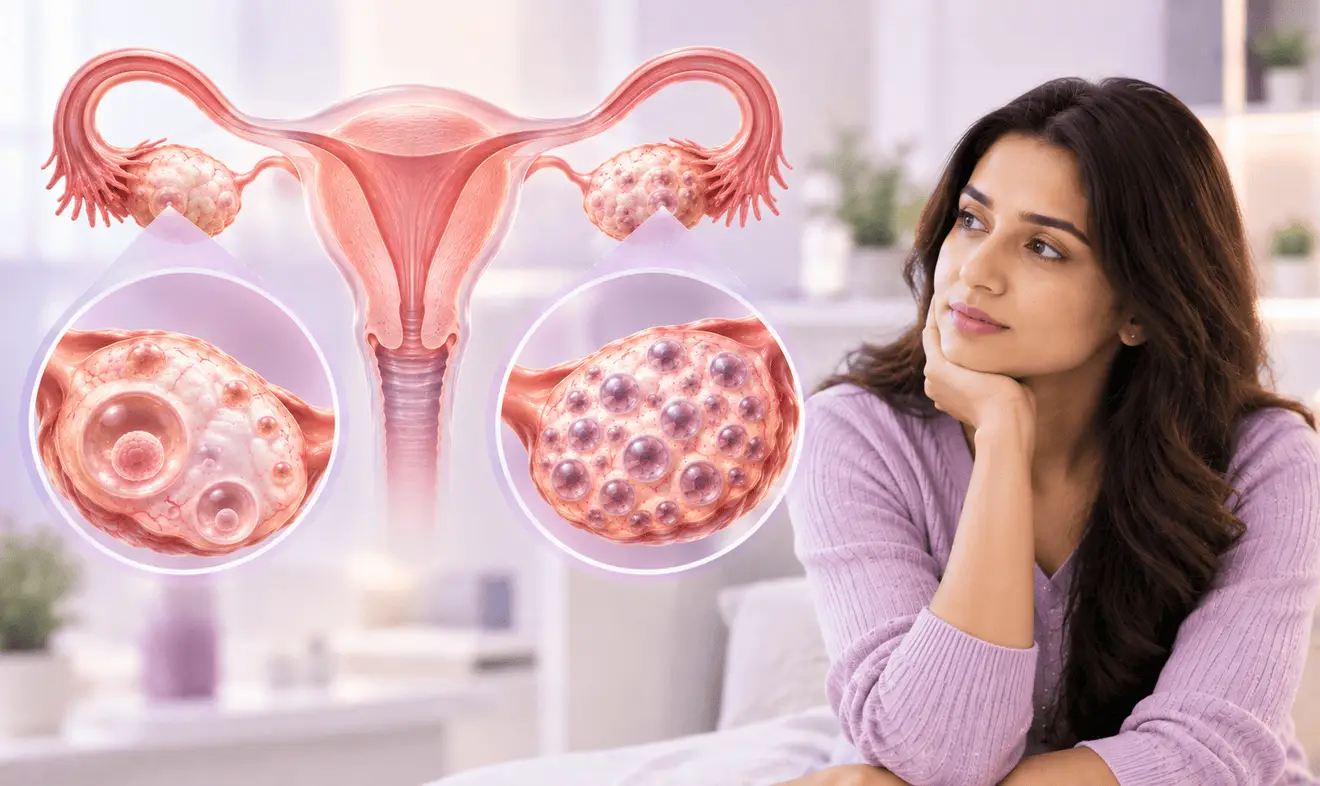
Normally, each menstrual cycle involves the growth of ovarian follicles. A follicle contains a developing egg. Usually, one follicle becomes dominant, the egg matures, and ovulation occurs. In PCOD, this process may not happen regularly. Several small follicles may remain in the ovaries instead of one becoming dominant and releasing an egg.
These follicles are often what people refer to as “cysts.” However, they are generally small developing follicles, not the same as pathological ovarian cysts that may require treatment. Their presence on an ultrasound does not, by itself, mean that something is wrong with the ovaries.
Women with PCOD can experience:
- Irregular or delayed periods
- Irregular ovulation
- Acne or oily skin
- Excess facial or body hair
- Weight changes
- Difficulty getting pregnant when ovulation is affected
The key fertility issue is ovulation. If the follicles do not develop and release an egg regularly, there are fewer opportunities for conception. This is why some women with PCOD may take longer to become pregnant, while others may have no difficulty conceiving.
What is PCOS, Now Called PMOS?
PCOS, now called Polyendocrine Metabolic Ovarian Syndrome (PMOS), is a complex endocrine condition that can affect ovulation, periods, and fertility. It can also affect how the body responds to insulin and how much androgen, or male-type hormone, it produces.
During each menstrual cycle, ovarian follicles develop as the egg matures. Usually, one follicle becomes dominant and releases the egg during ovulation. In PCOS, hormonal changes can disrupt this process. The follicles may not mature properly, which can affect ovulation and lead to irregular periods.
PCOS may cause:
- Irregular or missed periods
- Difficulty with regular ovulation
- Acne or oily skin
- Excess facial or body hair
- Hair thinning on the scalp
- Difficulty getting pregnant
An ultrasound may show several small follicles in the ovaries. These follicles contain developing eggs and are not the same as ovarian cysts. However, multiple follicles alone do not confirm PCOS. Your doctor will consider them along with your symptoms, periods, and hormone levels.
What is the Difference Between PCOD and PCOS?
PCOD and PCOS can cause similar symptoms, particularly irregular periods and ovulation problems. The table below highlights the key differences between the two and how they can affect your hormones, ovaries, and fertility.
| Feature | PCOD | PCOS |
|---|---|---|
| Follicle development | Multiple ovarian follicles may continue developing without one becoming dominant and leading to regular ovulation. | Hormonal changes can interfere with normal follicle development, so ovulation may not occur regularly. |
| Ovulation | Ovulation may be irregular, which means an egg may not be released in every cycle. | Ovulation is commonly irregular or absent. |
| Menstrual cycle | Irregular or delayed periods may occur because ovulation is not regular. | Periods may be irregular, infrequent, or absent because of disrupted ovulation. |
| Androgen levels | Androgen levels may or may not be affected, depending on the underlying hormonal changes. | Higher androgen levels or signs of androgen excess, such as acne or excess facial hair, are common features. |
| Ovarian appearance | An ultrasound may show several small follicles. These are developing follicles, not necessarily ovarian cysts. | An ultrasound may show polycystic ovarian morphology. However, this is only one possible feature of PCOS and is not required for diagnosis in every case. |
| Insulin and metabolism | Metabolic changes are not a defining feature and depend on the individual. | Insulin resistance and related metabolic changes can occur and are an important part of the condition for some women. |
| Fertility | Fertility may be affected when irregular ovulation reduces the chances of releasing an egg. | Fertility may be affected primarily because irregular ovulation makes it harder to conceive. |
What Causes PCOD and PCOS?
PCOD and PCOS can be caused by multiple factors. Let’s take a look at them below:
What Causes PCOD?
PCOD is generally associated with changes that affect follicle development and ovulation. Factors that may contribute include:
- Hormonal Changes: Changes in reproductive hormones can interfere with normal follicle growth and the release of an egg.
- Genetics: A family tendency toward hormonal or reproductive problems may increase the likelihood of developing these changes.
- Metabolic Factors: Changes in weight, insulin regulation, and metabolic health can influence hormone levels and ovulation in some women.
- Lifestyle Factors: Poor sleep, physical inactivity, and an imbalanced diet can affect metabolic and hormonal health, although they are not the sole cause of PCOD.
What Causes PCOS?
PCOS has a stronger association with genetic, hormonal, and metabolic factors.
- Genetics: PCOS often runs in families, suggesting that certain inherited genes can increase susceptibility.
- Androgen Excess: Androgens are hormones such as testosterone. Women naturally produce them in small amounts. In PCOS, higher androgen levels can interfere with follicle development and ovulation. This can also contribute to acne and excess facial or body hair.
- Insulin Resistance: Some women with PCOS do not respond to insulin as effectively as they should. The body may compensate by producing more insulin. Higher insulin levels can stimulate the ovaries to produce more androgens, further disrupting ovulation.
- Hormonal Imbalance: Changes in the hormones that regulate the menstrual cycle can affect follicle development and prevent regular ovulation.
What are the Symptoms of PCOD and PCOS?
PCOD and PCOS can share many symptoms, so the symptoms alone cannot always tell them apart. Some women may have only a few symptoms, while others may experience several.
Common PCOD Symptoms
- Irregular Periods: Periods may come late, become unpredictable, or occur less often.
- Irregular Ovulation: Ovulation may not happen in every cycle.
- Acne: Hormonal changes can increase oil production and contribute to breakouts.
- Excess Hair Growth: Some women may notice more hair on the face, chest, or abdomen.
- Weight Changes: Weight gain or difficulty managing weight may occur in some women.
- Difficulty Conceiving: Irregular ovulation can reduce the chances of pregnancy.
Common PCOS Symptoms
PCOS can cause similar reproductive symptoms, along with signs linked to higher androgen levels and metabolic changes:
- Irregular or missed periods
- Irregular ovulation
- Excess facial or body hair
- Acne or oily skin
- Thinning scalp hair
- Weight gain or difficulty losing weight
- Difficulty getting pregnant
- Signs of insulin resistance, such as darkened skin in body folds in some women
Not everyone with PCOS will have all these symptoms. Some women may have regular periods and still meet the criteria for PCOS, while others may have significant symptoms despite having no obvious ovarian changes on an ultrasound.
How are PCOD and PCOS Diagnosed?
There is no single blood test or ultrasound that can diagnose PCOD or PCOS.
For PCOS, the evaluation may include:
- Menstrual History: To check for irregular or absent periods and possible ovulation problems.
- Hormone Tests: Blood tests may check androgen levels and other hormones while ruling out conditions that can cause similar symptoms.
- Ultrasound: It can show the number and appearance of ovarian follicles. However, polycystic-appearing ovaries alone do not confirm PCOS.
- Metabolic Assessment: Blood glucose and other metabolic markers may be checked because PCOS can be associated with insulin resistance.
- Excluding Other Conditions: Thyroid disorders, high prolactin levels, and other hormonal conditions can cause similar symptoms and may need to be ruled out.
For PCOD, the evaluation depends on the symptoms being described as PCOD because the term itself does not have a defined diagnostic test.
| Note: Gynecologists usually focus on understanding why periods or ovulation are irregular rather than simply looking for “cysts” on an ultrasound. They consider your symptoms, menstrual history, hormone levels, ovulation, and ovarian health together before deciding on a diagnosis. |
How Do PCOD and PCOS Affect Fertility?
PCOD and PCOS can affect fertility mainly by disrupting ovulation. For pregnancy to occur naturally, an ovarian follicle needs to mature and release an egg. When ovulation becomes irregular or does not happen, there are fewer opportunities for fertilization.
This can happen in a few ways:
- Irregular Ovulation: An egg may not be released in every menstrual cycle.
- Delayed Ovulation: Ovulation may happen later than expected, making the fertile window difficult to predict.
- Absent Ovulation: In some cycles, a mature egg may not be released at all.
- Hormonal Changes: In PCOS, higher androgen levels and insulin resistance can interfere with normal follicle development and ovulation.
- Irregular Periods: When ovulation is irregular, periods can also become irregular or infrequent.
Does PCOD or PCOS Mean Infertility?
No. Having PCOD or PCOS does not mean you are infertile. Many women with these conditions become pregnant naturally. If irregular ovulation is making conception difficult, medication can often be used to help the ovaries ovulate more regularly.
It is also important not to assume that PCOD or PCOS is the only reason for difficulty conceiving. Age, sperm health, fallopian tube health, ovarian reserve, and other fertility factors can also affect the chances of pregnancy.
What Are the Treatment Options for PCOD and PCOS?
There is no single treatment that works for everyone. The right approach depends on what symptoms you have, whether you are ovulating, and whether you are trying to conceive.
PCOD Treatment
Treatment usually focuses on improving the symptoms and restoring regular ovulation when needed. It may include:
- Lifestyle Changes: Regular physical activity, balanced nutrition, adequate sleep, and weight management when appropriate can support hormonal and metabolic health.
- Managing Irregular Periods: Your gynecologist may recommend medication to regulate periods when needed.
- Managing Symptoms: Acne or excess hair growth may need specific treatment.
- Improving Ovulation: If you are trying to conceive and ovulation is irregular, medication may be used to help trigger ovulation.
PCOS Treatment
PCOS treatment depends on your reproductive goals, such as:
- If you are not trying to conceive: Treatment may focus on regulating periods, managing acne or excess hair growth, and addressing metabolic concerns.
- If you are trying to conceive: The focus is usually on restoring or inducing ovulation. Letrozole is recommended as the first-line medication for ovulation induction in women with PCOS who have anovulatory infertility and no other infertility factors.
- If ovulation medicines do not work: Other fertility treatments, including IUI or IVF, may be considered depending on the individual situation.
Can Women With PCOD or PCOS Have a Successful IVF?
Yes. Women with PCOD or PCOS can have a successful IVF pregnancy. Having PCOS does not mean that IVF will not work. In fact, the 2023 International Evidence-Based Guideline states that IVF is effective for women with PCOS and anovulatory infertility when it is indicated.
The chances of success depend on several factors, including:
- Age: Egg quality generally declines with age and can affect IVF outcomes.
- Egg and Embryo Quality: The ability to obtain good-quality eggs and embryos plays an important role.
- Ovarian Reserve: The number of eggs available can influence the response to stimulation.
- Sperm Health: Sperm quality can also affect fertilization and embryo development.
- Uterine Health: The condition of the uterus and endometrium can affect implantation and pregnancy.
- Overall Fertility Factors: PCOS may be one part of the fertility picture, rather than the only factor involved.
What are the Risks of IVF With PCOS?
The main risk of IVF with PCOS is ovarian hyperstimulation syndrome (OHSS). Women with PCOS can have a stronger response to ovarian stimulation medicines because they may have a large number of follicles. This can increase the risk of OHSS during IVF.
Fertility specialists can reduce this risk by individualizing the IVF protocol. Depending on the woman’s response, this may include:
- Using a GnRH antagonist protocol
- Using a GnRH agonist trigger instead of an hCG trigger when appropriate
- Freezing suitable embryos and transferring them in a later cycle when necessary
The 2023 guideline specifically recommends counselling women with PCOS about the increased risk of OHSS and using appropriate strategies to reduce it.
Conclusion
PCOD and PCOS can look similar, but they are not the same. Both can affect periods, ovulation, and fertility, particularly when ovulation becomes irregular.
Having PCOD or PCOS does not mean you cannot get pregnant. Many women conceive naturally, while others may need medication or fertility treatment to help with ovulation.
If you are having irregular periods or difficulty conceiving, connect with our expert gynecologists at Archish IVF & Fertility Clinic for a proper evaluation and the right treatment.
FAQs
Yes. In May 2026, the American Society for Reproductive Medicine (ASRM) endorsed the new name Polyendocrine Metabolic Ovarian Syndrome (PMOS) for the condition previously known as PCOS. The change reflects that the condition can involve hormonal, metabolic, ovarian, and reproductive features, rather than being limited to the ovaries.
Yes. Many women with PCOS can become pregnant naturally. If irregular ovulation is making conception difficult, treatment can help improve ovulation.
Not in the way people fear. PCOD is not a stage that becomes PCOS. Symptoms can change over time, so recheck with your doctor if they worsen.
No. Having multiple follicles or a polycystic appearance on an ultrasound does not, by itself, confirm PCOS. The diagnosis considers the overall clinical picture.
It is not accurate to simply call one more serious than the other. The impact depends on the individual's symptoms, ovulation, hormonal profile, and overall health.