IVF Process Step by Step: What to Expect at Every Stage
From considering infertility a social taboo to seeing IVF awareness across almost every corner of Bangalore, we have come a long way.
Today, In Vitro Fertilization (IVF) is no longer viewed as an unfamiliar or intimidating procedure. Many couples openly seek fertility treatment, successfully undergo IVF, and begin their journey toward parenthood with the support of experienced fertility specialists.
Infertility affects nearly one in five couples in India, yet many people still do not fully understand what the IVF process involves. Questions about IVF injections, egg retrieval, embryo transfer, treatment timelines, success rates, and possible side effects often create unnecessary anxiety before treatment even begins.
This guide explains the IVF process step by step in a simple, practical, and easy-to-understand way, helping you know what to expect at every stage of your fertility journey.
What Is IVF?
In Vitro Fertilization (IVF) is an advanced fertility treatment in which eggs and sperm are fertilized outside the body inside a specialized embryology laboratory.
In a natural pregnancy, fertilization takes place inside the fallopian tube. During IVF, your fertility specialist retrieves mature eggs from your ovaries and combines them with sperm under carefully controlled laboratory conditions. Once healthy embryos develop, one embryo is transferred into the uterus with the goal of achieving implantation and pregnancy.
Today, IVF is one of the most effective and well-established assisted reproductive technologies available.
Who Is IVF Recommended For?
IVF is not a one-size-fits-all treatment. Your fertility specialist recommends it based on your medical history, fertility evaluation, and individual diagnosis.
IVF may be recommended for couples experiencing:
- Blocked or damaged fallopian tubes
- PCOS-related infertility
- Male factor infertility
- Endometriosis
- Unexplained infertility
- Advanced maternal age
- Repeated unsuccessful fertility treatments
What Are the Steps of an IVF Treatment?
Understanding each stage of IVF helps reduce anxiety and allows you to prepare confidently for your treatment journey.
Step 1: Initial IVF Consultation
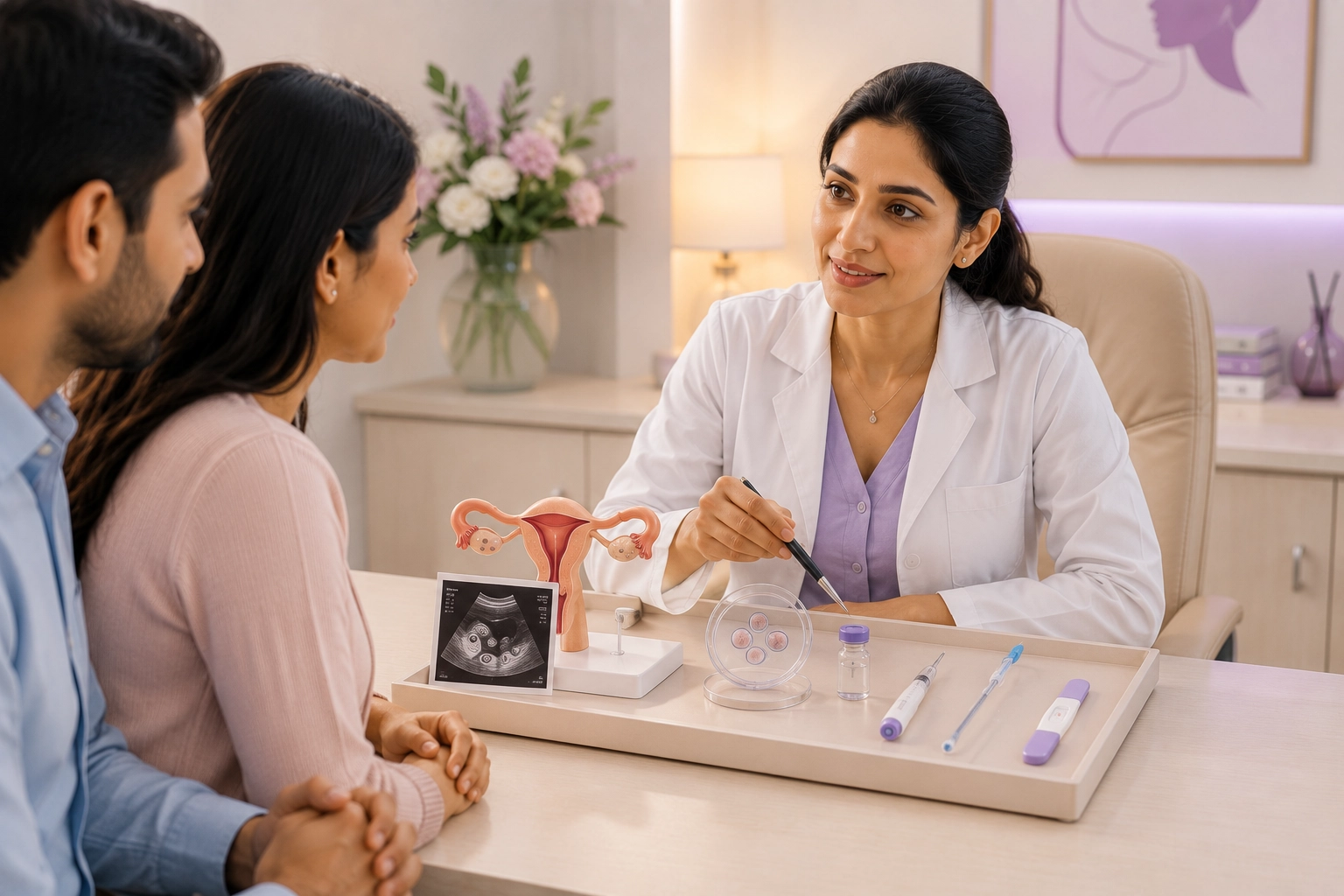
Your IVF journey begins with a detailed consultation with a fertility specialist. During this appointment, your doctor reviews your medical history, previous pregnancies, fertility treatments, menstrual history, medications, and lifestyle factors.
Investigations for Women
- AMH (Anti-Müllerian Hormone) test to evaluate ovarian reserve
- Antral Follicle Count (AFC) through ultrasound
- Hormone blood tests including FSH, LH, Estradiol, TSH, and Prolactin
- Ultrasound evaluation of the uterus
- Routine infectious disease screening
Investigations for Men
- Semen analysis to evaluate sperm count, motility, and morphology
- Hormonal blood investigations when required
- Routine infectious disease screening
This assessment phase usually takes two to four weeks. Providing complete and accurate medical information allows your fertility team to develop the most appropriate treatment plan.
Step 2: Ovarian Stimulation (IVF Injection Phase)
Once your fertility evaluation is complete, your doctor prescribes fertility medications to stimulate your ovaries to produce multiple mature eggs instead of the single egg produced during a natural menstrual cycle.
Hormone injections generally begin on Day 2 or Day 3 of your menstrual cycle and continue for approximately 10 to 14 days.
Throughout this phase, your response is closely monitored through regular ultrasound scans and blood tests. Based on these results, medication doses may be adjusted to encourage healthy follicle development while reducing treatment risks.
Common Side Effects During Ovarian Stimulation
- Mild bloating
- Breast tenderness
- Mood changes
- Fatigue
- A feeling of abdominal heaviness
These side effects are usually temporary and are well tolerated by most women undergoing IVF treatment.
Step 3: Egg Retrieval Procedure
Once the ovarian follicles reach the desired size, a trigger injection is administered to prepare the eggs for retrieval. The egg retrieval procedure is scheduled approximately 34 to 36 hours later.
Egg retrieval is performed under mild sedation, ensuring that you remain comfortable throughout the procedure. Using ultrasound guidance, your fertility specialist gently removes the fluid from each mature follicle, which contains the eggs. The collected eggs are immediately transferred to the embryology laboratory.
The procedure usually takes between 15 and 30 minutes, depending on the number of follicles. After a short recovery period, most patients return home the same day.
What Can You Expect After Egg Retrieval?
It is common to experience:
- Mild cramping
- Light spotting
- Temporary bloating
- Mild tiredness
Most women recover within one or two days. Your doctor may recommend adequate hydration, rest, and avoiding strenuous physical activity during this period.
Step 4: Fertilization in the Laboratory
On the day of egg retrieval, the male partner provides a semen sample. The embryologist then prepares the sperm and combines it with the collected eggs.
Fertilization may occur using one of two methods.
Conventional IVF
Healthy eggs are placed together with thousands of sperm inside a laboratory culture dish, allowing fertilization to occur naturally.
ICSI (Intracytoplasmic Sperm Injection)
When sperm quality is reduced or previous fertilization has been unsuccessful, a single healthy sperm is injected directly into each mature egg using advanced microscopic techniques.
The following day, the embryology team carefully evaluates which eggs have fertilized successfully.
IVF vs IUI: Understanding the Difference
If your fertility specialist discusses both IVF and IUI as treatment options, understanding the differences can help you make an informed decision.
| Aspect | IUI (Intrauterine Insemination) | IVF (In Vitro Fertilization) |
|---|---|---|
| Procedure | Sperm is placed directly inside the uterus. | Eggs and sperm are fertilized in a laboratory. |
| Best Suited For | Mild fertility problems or unexplained infertility. | Blocked tubes, PCOS, severe male infertility, endometriosis, and advanced maternal age. |
| Medications | Mild hormonal stimulation. | Hormonal injections to stimulate multiple eggs. |
| Success Rate | Approximately 10–20% per cycle. | Approximately 40–78% per cycle (depending on age and clinical factors). |
| Treatment Duration | 1–2 weeks. | 4–6 weeks. |
| Procedure Complexity | Minimally invasive. | Requires egg retrieval under sedation. |
| Cost | Lower. | Higher due to advanced laboratory procedures. |
Step 5: Embryo Development and Monitoring
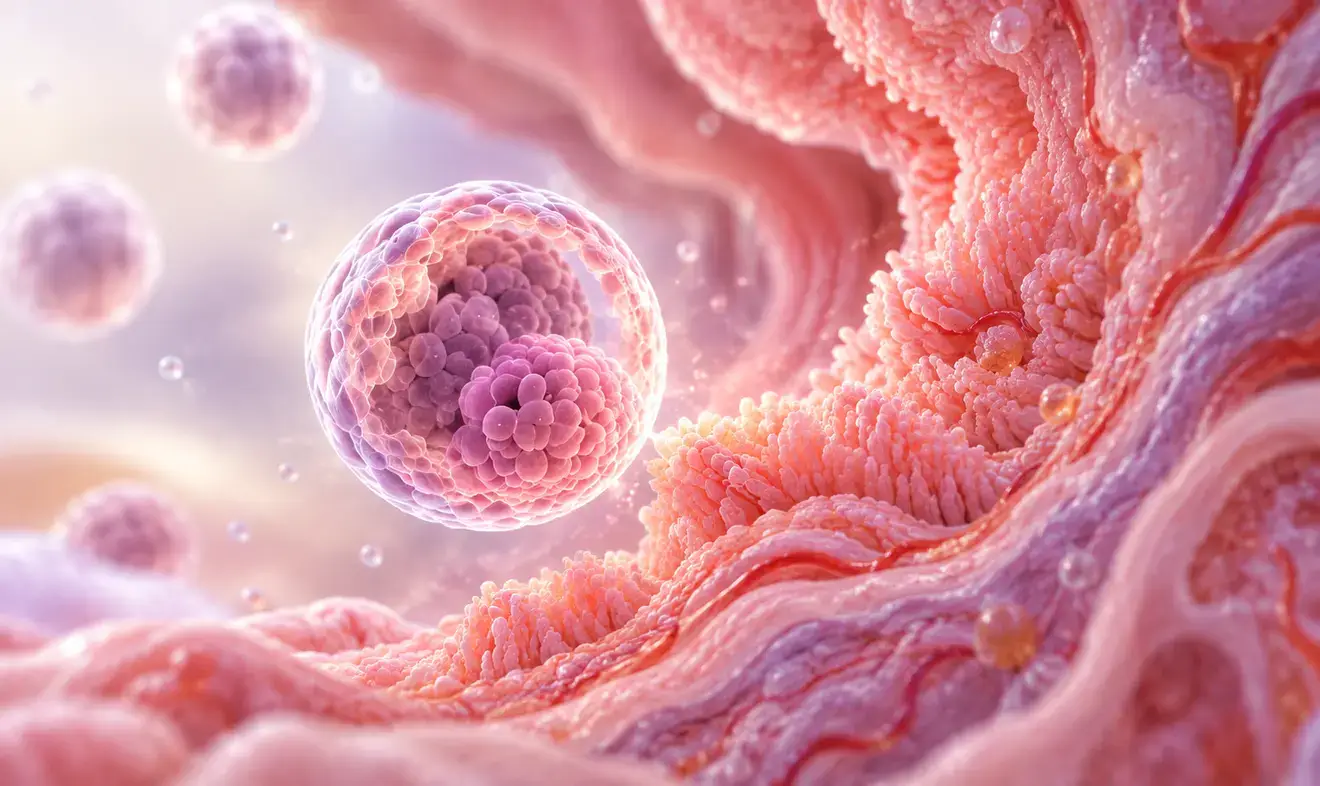
After successful fertilization, the embryos are carefully monitored inside the embryology laboratory for the next five to six days. During this period, embryologists observe how each embryo grows and develops.
By Day 5 or Day 6, a healthy embryo typically reaches the blastocyst stage, indicating that it has developed sufficiently for transfer into the uterus.
The embryology team evaluates each embryo based on its growth and quality to identify those with the highest potential for implantation and pregnancy.
Preimplantation Genetic Testing (PGT)
In selected cases, your fertility specialist may recommend Preimplantation Genetic Testing (PGT) before embryo transfer. This advanced test helps identify certain genetic or chromosomal abnormalities in embryos.
PGT may be recommended for:
- Advanced maternal age
- Recurrent pregnancy loss
- Repeated IVF failures
- Known inherited genetic conditions
Your fertility specialist will explain whether this additional test is appropriate for your specific situation.
Step 6: Embryo Transfer Procedure
Embryo transfer is one of the simplest and most comfortable stages of the IVF process. The procedure usually takes only 10 to 15 minutes and typically does not require anesthesia.
During the procedure, your fertility specialist gently passes a thin, flexible catheter through the cervix into the uterus. The selected embryo is then carefully placed within the uterine cavity under ultrasound guidance.
You remain awake throughout the procedure and can often watch the embryo transfer on the ultrasound monitor.
Types of Embryo Transfer
Fresh Embryo Transfer
A fresh embryo transfer is performed three to five days after egg retrieval during the same IVF cycle.
Frozen Embryo Transfer (FET)
In a Frozen Embryo Transfer, embryos are cryopreserved and transferred during a later menstrual cycle after the uterus has been appropriately prepared.
Many fertility specialists now recommend FET for selected patients because allowing the body additional recovery time may improve implantation and pregnancy outcomes.
What Happens After Embryo Transfer?
Following embryo transfer, your fertility specialist may recommend:
- Continuing all prescribed medications.
- Light daily activities instead of complete bed rest.
- Avoiding heavy lifting and strenuous exercise.
- Managing stress through relaxation techniques.
- Getting adequate sleep and staying well hydrated.
Following your doctor’s aftercare instructions carefully supports recovery and provides the best environment for implantation.
Step 7: The Two-Week Wait and Pregnancy Test
After embryo transfer comes what many couples describe as the most emotionally challenging stage of IVF—the Two-Week Wait.
During this period, you continue taking your prescribed medications, particularly progesterone supplements, while waiting for implantation to occur.
Approximately 14 days after embryo transfer, your doctor performs a Beta-hCG blood test. This blood test measures the pregnancy hormone and provides the most accurate confirmation of pregnancy.
A positive result indicates that implantation has likely occurred, after which your fertility specialist schedules an ultrasound scan to monitor the early pregnancy.
IVF Process Timeline: How Long Does IVF Take?
One of the most frequently asked questions is how long the complete IVF process takes.
Although every treatment plan is individualized, a typical IVF cycle generally follows the timeline below.
| IVF Stage | Estimated Timeline |
|---|---|
| Initial Consultation & Fertility Testing | 1–2 weeks |
| Ovarian Stimulation | 8–14 days |
| Trigger Injection | 1 day |
| Egg Retrieval | 1 day |
| Fertilization & Embryo Development | 3–5 days |
| Embryo Transfer | 1 day |
| Pregnancy Blood Test | 10–14 days after embryo transfer |
For most patients, one complete IVF treatment cycle takes approximately 4 to 6 weeks. Including the initial consultation, fertility investigations, and the two-week waiting period, the overall journey generally lasts between 6 and 8 weeks.
If Preimplantation Genetic Testing (PGT) is recommended, the treatment timeline may extend by an additional one to three weeks. Likewise, when a Frozen Embryo Transfer (FET) is planned, the overall treatment duration increases by approximately four to six weeks.
How to Prepare for an IVF Procedure
Preparing physically and emotionally before IVF can help support a smoother treatment journey. Although preparation alone cannot guarantee success, healthy lifestyle habits can improve your overall reproductive health.
Preparation Tips for Women
- Begin folic acid supplementation at least three months before starting IVF.
- Eat a balanced diet rich in protein, antioxidants, iron, fruits, and vegetables.
- Avoid smoking and alcohol consumption.
- Maintain a healthy Body Mass Index (BMI).
- Stay well hydrated throughout treatment.
- Sleep for seven to eight hours every night.
- Practice stress-management techniques such as yoga, meditation, or gentle exercise.
- Avoid over-the-counter medications unless approved by your fertility specialist.
Preparation Tips for Men
- Avoid smoking, alcohol, and recreational drugs.
- Limit exposure to excessive heat around the groin area.
- Maintain a healthy weight and exercise regularly.
- Take nutritional supplements only if recommended by your doctor.
- Avoid lubricants that may negatively affect sperm quality.
- Provide the semen sample after two to five days of abstinence on egg retrieval day.
Preparation Tips for Couples
- Attend every scheduled monitoring appointment.
- Communicate openly with your fertility specialist.
- Follow your medication schedule carefully.
- Seek emotional support whenever needed from family, counselors, or fertility support professionals.
What Results Can You Expect After the IVF Procedure?
Every IVF journey is unique, and treatment outcomes can vary from one couple to another. Your fertility specialist will explain your results in detail and guide you through the next steps based on your individual situation.
Following an IVF cycle, you may experience one of the following outcomes.
Positive Pregnancy Test
A positive Beta-hCG blood test indicates that implantation has likely occurred and pregnancy has begun.
Your fertility specialist will schedule follow-up blood tests and ultrasound scans to confirm that the pregnancy is developing normally and to monitor the baby’s heartbeat during the early weeks.
Negative Pregnancy Test
A negative pregnancy result can be emotionally difficult, but it does not mean IVF will never work for you.
Your fertility specialist will carefully review every stage of your treatment cycle, including ovarian response, egg quality, fertilization, embryo development, and uterine conditions, to determine whether any adjustments can improve future treatment outcomes.
Many couples successfully conceive during their second or third IVF cycle.
Chemical Pregnancy
A chemical pregnancy occurs when the pregnancy hormone (Beta-hCG) is detected in the blood, but the pregnancy stops developing during the very early stages.
Although emotionally challenging, a chemical pregnancy provides valuable clinical information that helps your fertility specialist plan future treatment more effectively.
Frozen Embryos Available
If additional healthy embryos are available after embryo transfer, they may be cryopreserved (frozen) for future use.
Frozen embryos can later be used during a Frozen Embryo Transfer (FET) cycle without repeating ovarian stimulation or egg retrieval, reducing both treatment time and physical burden.
Your Dream of Parenthood Is Worth Every Step
The IVF process may seem overwhelming at first, but understanding each stage can replace uncertainty with confidence.
From your initial consultation to embryo transfer and pregnancy testing, every step is carefully planned to maximize your chances of success while ensuring your comfort and safety throughout treatment.
Remember that every fertility journey is different. While some couples achieve pregnancy during their first cycle, others may require additional treatment. Patience, personalized care, and expert medical guidance are all important parts of a successful IVF journey.
Begin Your IVF Journey with Archish Fertility & IVF Centre
At Archish Fertility & IVF Centre, Bengaluru, we understand that fertility treatment is about much more than medical procedures—it is about helping families achieve their dream of parenthood with compassion, transparency, and personalized care.
Our experienced fertility specialists combine advanced reproductive technology, modern embryology laboratories, and individualized treatment planning to provide the highest standard of fertility care.
Whether you are considering IVF for the first time or exploring treatment after previous unsuccessful attempts, our team will guide you through every stage with clear communication and continuous support.
Book your consultation today and take the first step toward building your family with confidence.
FAQs
Many couples conceive within 1 to 3 IVF cycles. The number of cycles needed depends on your diagnosis, age, embryo quality, and uterine health. Your doctor will discuss realistic expectations based on your specific situation.
Yes, many women continue their regular work routine during IVF treatment. However, doctors may recommend avoiding excessive physical stress during certain stages.
Yes. PCOS is one of the most common reasons couples choose IVF treatment. Fertility specialists customize the treatment plan based on your condition to support healthy egg development and improve the chances of a successful pregnancy.