Blocked Fallopian Tubes and Pregnancy: Treatment Options Before IVF
Blocked fallopian tubes are one of the leading causes of tubal factor infertility in women. When one or both tubes are partially or completely blocked, the egg and sperm cannot meet, making natural conception difficult.
However, a blocked fallopian tube does not always mean pregnancy is impossible. Depending on the location and severity of the blockage, some women may conceive naturally after treatment, while others may benefit from IVF.
In this guide, the fertility specialists at Archish IVF & Fertility Clinic, Bengaluru, explain how blocked fallopian tubes and pregnancy are connected, the common symptoms and causes, how the condition is diagnosed, and the treatment options before IVF. It also includes a real case study of a woman who conceived naturally after bilateral tube blockage, to help you take your next fertility step.
What Are the Fallopian Tubes?
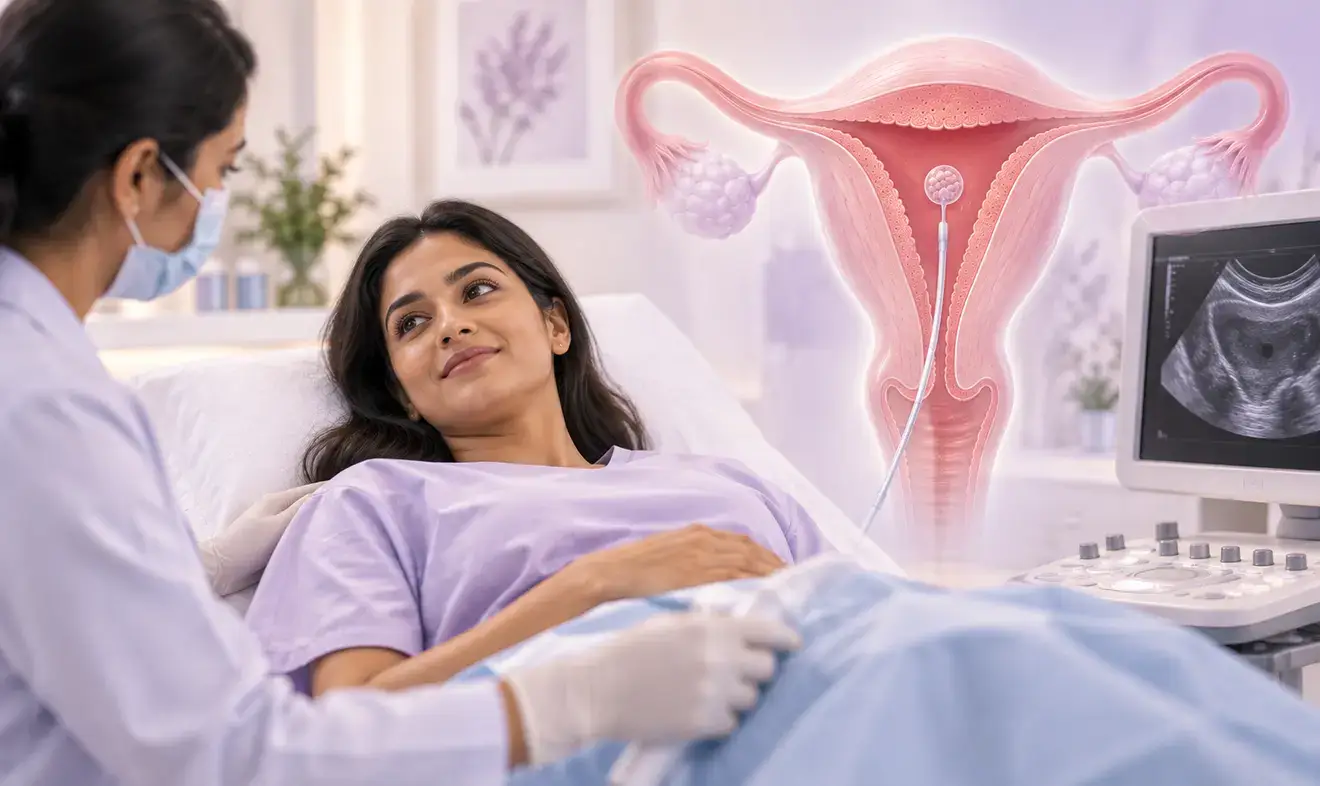
The fallopian tubes are two thin tubes that connect the ovaries to the uterus. They play an important role in natural conception.
Every month, one of the ovaries releases an egg during ovulation. The fallopian tube picks up the egg and carries it toward the uterus. If sperm reaches the egg within the tube, fertilization occurs. The fertilized egg then travels to the uterus, where it implants and develops into a pregnancy.
When one or both fallopian tubes become blocked or damaged, this journey is interrupted. The egg and sperm cannot meet, or the fertilized egg may not reach the uterus safely. This is known as tubal factor infertility.
How Does a Blocked Fallopian Tube Affect Pregnancy?
A blocked fallopian tube can make it difficult to conceive because it prevents the egg and sperm from meeting. Depending on where the blockage is located, it may also stop a fertilized egg from reaching the uterus.
The effect on fertility depends on several factors, including:
- Whether one blocked fallopian tube or both fallopian tubes are blocked
- The location of the blockage
- Whether the tubes are swollen or damaged
- Your age and overall reproductive health
- The presence of other fertility conditions, such as endometriosis or pelvic infections
What are the Types of Blocked Fallopian Tubes?
A blocked fallopian tube can occur at different locations along the tube. Identifying the exact site of the blockage helps fertility specialists choose the most appropriate treatment and estimate the chances of natural conception.
The table below explains the different types of fallopian tube blockages and how each one can affect pregnancy:
| Type of blockage | Where it occurs | How it affects pregnancy |
|---|---|---|
| Proximal blockage | Near the uterus | Prevents sperm or the egg from entering the tube. In selected cases, tubal cannulation may help restore the passage. |
| Mid-segment blockage | Middle portion of the tube | Often results from previous surgery, infection, or scarring, making fertilization difficult. |
| Distal blockage | Near the ovary | Stops the egg from entering the tube or prevents the fertilized egg from reaching the uterus. |
| Hydrosalpinx | Tube filled with fluid due to severe distal blockage | The accumulated fluid can reduce natural fertility and lower IVF success rates. Treatment is often recommended before IVF. |
Did You Know?
- Some women with one healthy fallopian tube can still conceive naturally.
- A partial blockage can sometimes allow sperm to reach the egg, but the fertilised egg may get stuck in the tube. This leads to an ectopic pregnancy, which is a medical emergency.
What Are the Signs and Symptoms of a Blocked Fallopian Tube?
Many women do not experience any symptoms until they have difficulty getting pregnant. In fact, a blocked fallopian tube is often discovered during a fertility evaluation.
When symptoms do occur, they may include:
- Difficulty conceiving after trying for several months
- Pelvic or lower abdominal pain, especially on one side
- Pain during periods in some cases
- Pain during intercourse
- Unusual vaginal discharge if an infection is present
- Previous history of pelvic inflammatory disease or sexually transmitted infections
- A history of ectopic pregnancy
What Causes a Blocked Fallopian Tube?
The most common cause of fallopian tube blockage is inflammation, infection, or scar tissue.
Some of the common causes include:
- Pelvic Inflammatory Disease (PID): Bacterial infections, often from chlamydia or gonorrhoea, cause inflammation that leads to scarring inside the tubes.
- Endometriosis: Tissue that grows outside the uterus can cover or press into the tubes, causing them to become blocked or distorted.
- Previous Pelvic or Abdominal Surgery: Surgeries for ovarian cysts, fibroids, or appendicitis can leave adhesions that affect the tubes.
- Past Ectopic Pregnancy: Scarring from an ectopic pregnancy can damage or close the affected tube.
- Uterine or Tubal Infections: Infections following childbirth, miscarriage, or IUD use can cause inflammation and scarring over time.
- Congenital Abnormalities: Some women are born with structurally narrow or irregularly shaped tubes. This is rare but can affect fertility.
How Are Blocked Fallopian Tubes Diagnosed?
Since most women have no symptoms of blocked fallopian tubes, diagnosis typically happens during a fertility investigation.
Your fertility specialist may recommend the following tests to proceed with the right fallopian tube blockage treatment:
Hysterosalpingography (HSG): An HSG test for blocked tubes is usually the first investigation. During this procedure, a special dye is injected into the uterus while X-ray images are taken. If the dye passes freely through the fallopian tubes, they are considered open. If it stops at any point, it may indicate a blockage. HSG is a quick, minimally invasive procedure.
Sonosalpingography (SSG): Also known as saline infusion sonography, this test uses ultrasound and saline solution to check whether the fallopian tubes are open. It avoids radiation and may be recommended in selected cases.
Laparoscopy: If imaging tests are inconclusive or your doctor suspects conditions such as endometriosis or pelvic adhesions, a laparoscopy for blocked fallopian tubes may be advised. This minimally invasive surgery uses a small camera inserted through tiny abdominal incisions to directly examine the uterus, ovaries, and fallopian tubes. It remains the most accurate method for confirming tubal blockage and identifying the underlying cause.
Other Fertility Tests: Since infertility can have more than one cause, your fertility specialist may also recommend:
- Transvaginal ultrasound to examine the uterus and ovaries
- Hormone tests to evaluate ovulation and ovarian reserve
- Additional blood tests based on your medical history
Does a Blocked Fallopian Tube Affect Egg Quality or Ovarian Reserve?
No, blocked fallopian tubes do not affect egg quality or ovarian reserve. These are two different aspects of fertility.
Your ovaries are responsible for producing and releasing eggs, while the fallopian tubes act as the pathway that allows the egg and sperm to meet. When the tubes are blocked, the eggs can still develop and ovulate normally. The challenge is that the egg may not be able to travel through the tube or meet the sperm for fertilization.
So, what is the connection?
Although a tubal blockage does not directly damage your eggs, the underlying condition causing the blockage may influence your overall fertility. The underlying conditions can be endometriosis or long-standing pelvic infections.
This is why fertility specialists evaluate your reproductive health as a whole instead of focusing only on the fallopian tubes.
How Do Doctors Check Egg Quality and Ovarian Reserve?
If you have been diagnosed with blocked fallopian tubes, your fertility specialist may recommend additional tests to understand your fertility potential. These include:
- AMH (Anti-Müllerian Hormone) test to estimate ovarian reserve
- Antral Follicle Count (AFC) through ultrasound
- Hormone tests, such as FSH and Estradiol, if required
- Ultrasound to assess ovarian health
Case Study: Can You Get Pregnant With Blocked Fallopian Tubes?
Yes, pregnancy is possible, depending on the extent and type of blockage. Here is how it breaks down:
- One blocked fallopian tube: Natural conception is still possible. The other tube can pick up the egg and allow fertilisation.
- Both fallopian tubes blocked: Natural conception is unlikely, but pregnancy is still achievable through medical treatment or IVF.
A published case study in the journal Medicine (2019) reported the case of a 39-year-old woman diagnosed with bilateral fallopian tube obstruction and diminished ovarian reserve (DOR). She had been trying to conceive for five years and had undergone three unsuccessful IVF cycles in the United States, Japan, and China.
After conventional treatments failed, she underwent electroacupuncture at a clinic in Beijing, receiving three sessions per week for three months. Following the treatment, her menstrual cycle normalized, she conceived naturally, and later delivered a healthy baby boy.
Key Takeaway: While this is a single case report and individual outcomes vary, it highlights that pregnancy may still be possible in some women with blocked fallopian tubes. The right treatment depends on the type of blockage, age, ovarian reserve, and overall reproductive health.
Treatment Options for Blocked Fallopian Tubes Before IVF
Treatment for blocked fallopian tubes is highly individualized. Before considering IVF, fertility specialists evaluate the type of blockage, your reproductive health, and the likelihood of restoring natural fertility through other medical or surgical options.
Tubal Cannulation
Tubal cannulation is often recommended for a proximal blockage, where the tube is blocked near the uterus.
During the procedure, a thin catheter is passed through the cervix into the fallopian tube to clear the blockage. Since it does not require major surgery, recovery is usually quick, and some women may conceive naturally afterward if the tubes are otherwise healthy.
Laparoscopic Surgery
If the blockage is caused by scar tissue, adhesions, or mild endometriosis, laparoscopy for blocked fallopian tubes may help restore the normal structure of the tube.
The surgeon removes or releases the tissue causing the blockage while preserving the healthy part of the tube whenever possible. The success of surgery depends on the location and severity of the damage.
Treatment for Hydrosalpinx
Hydrosalpinx is a condition in which a fallopian tube becomes swollen with fluid due to severe blockage.
Because the fluid can reduce implantation rates and lower IVF success, doctors often recommend treating the affected tube before IVF. This may involve salpingectomy, where the damaged tube is removed, or another procedure to block the fluid from entering the uterus.
Treating the Underlying Cause
When the blockage is linked to an underlying condition, treating the cause is equally important. This may include:
- Antibiotics for pelvic infections
- Medical or surgical treatment for endometriosis
- Removal of pelvic adhesions
- Management of other reproductive conditions affecting fertility
Fertility Preservation
For women with reduced ovarian reserve or those who may require extensive surgery, the fertility specialist may discuss fertility preservation, such as freezing eggs or embryos, before treatment. This helps preserve future pregnancy options, particularly when age or ovarian reserve is a concern.
When Is IVF Recommended for Blocked Fallopian Tubes?
IVF is usually recommended when:
- Both fallopian tubes are severely blocked or extensively damaged.
- Previous tubal surgery has not resulted in pregnancy.
- Hydrosalpinx significantly affects fertility.
- Other fertility factors, such as male infertility or low ovarian reserve, are also present.
- Age or time-sensitive fertility concerns make IVF the most suitable option.
FAQs
Yes. Depending on the location and severity of the blockage, treatments such as laparoscopy, tubal cannulation, or managing the underlying cause (like endometriosis or infection) can restore tubal function. Many women conceive naturally after these procedures.
It depends on the type of blockage and your individual health profile. Surgery is a good option for mild to moderate blockages where the tube can be repaired. IVF is preferred when both tubes are severely damaged, when the woman is older, or when previous surgeries have not helped. Your fertility specialist can guide you on which path fits your situation.